
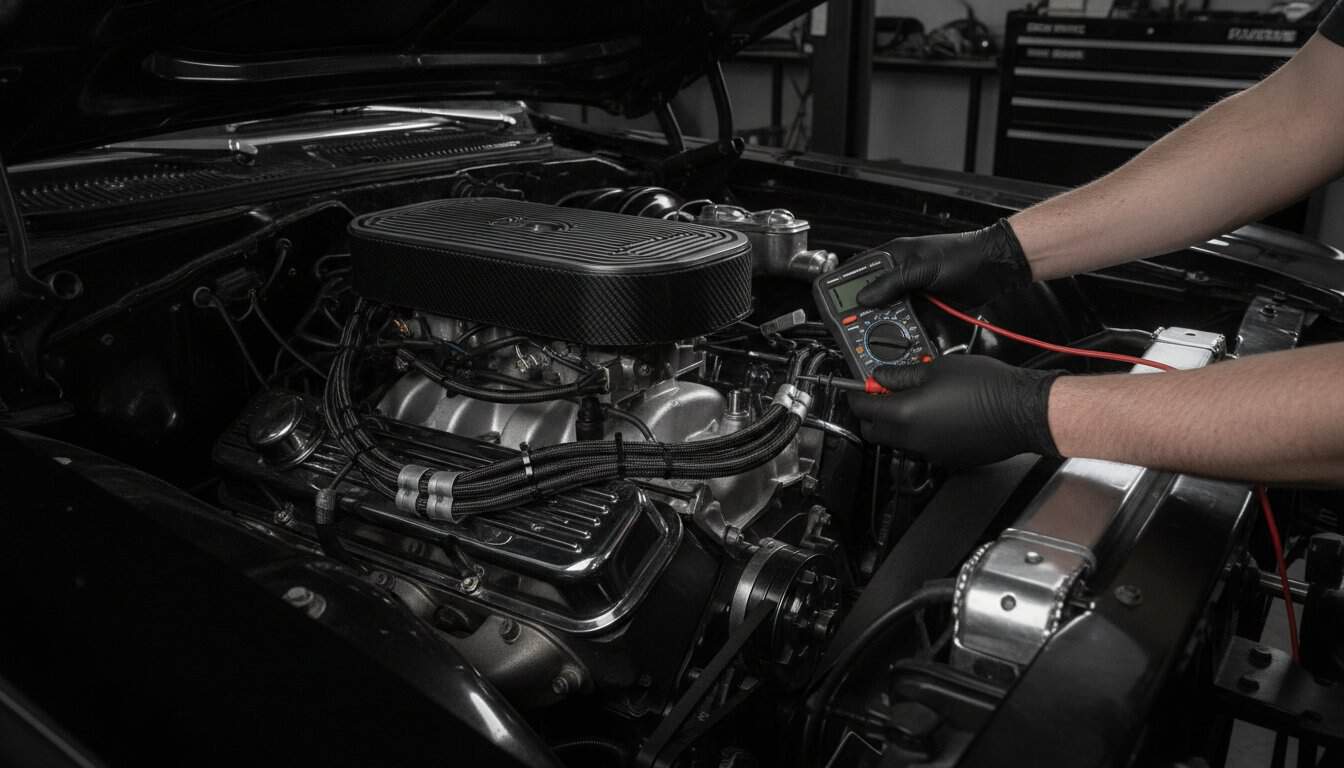
You turn the key, expecting that familiar roar, but instead, you’re met with a disheartening click and the faint, acrid scent of 50-year-old insulation heating up. It’s a moment every vintage owner dreads, and it often marks the beginning of a frustrating hunt for a hidden short. We’ve all been there, staring at a dashboard of flickering gauges and wondering if a single loose ground is about to turn a weekend cruise into a roadside rescue. The fear of an electrical fire or the headache of a 6V to 12V conversion can make even the most seasoned builder feel like they’re chasing ghosts.
Mastering the art of troubleshooting classic car electrical issues is about more than just fixing a light; it’s about building a bridge between heritage aesthetics and modern performance. This guide will strip away the mystery, giving you the precision of a master technician and the confidence to modernize your system for total reliability. We’ll walk through the methodical use of a multimeter, the logic of circuit isolation, and the steps to ensure your project starts every single time. It’s time to stop guessing and start creating a machine that’s as dependable as it is beautiful.
Key Takeaways
- Identify the three environmental enemies—heat, vibration, and corrosion—that compromise vintage wiring over decades of use.
- Learn to use a digital multimeter as your primary diagnostic roadmap for troubleshooting classic car electrical issues by mastering voltage, resistance, and continuity tests.
- Eliminate the myth of the electrical gremlin by uncovering why poor ground straps are responsible for nearly 90% of flickering lights and erratic gauges.
- Determine exactly when to patch a factory harness and when to upgrade to a modern blade-style fuse block for enhanced safety and accessory capacity.
- Build a permanent legacy for your project by developing custom electrical schematics and labeling systems that simplify every future maintenance task.
The Anatomy of Classic Car Electrical Failure
Most enthusiasts treat electrical problems like a dark art, but troubleshooting classic car electrical issues is actually a study in physics and time. Over fifty years, your vehicle’s wiring has faced a relentless assault from three primary enemies: heat cycles, constant vibration, and environmental corrosion. Every time you drive, the expansion and contraction of copper under the hood weakens connections, while moisture turns once-shiny terminals into green, non-conductive crust. This isn’t just about a light bulb failing; it’s about the systemic degradation of the vehicle’s central nervous system.
This degradation is what gives birth to the common “electrical gremlin.” In reality, these ghosts aren’t magic; they are almost always the result of a high-resistance path or a failing ground. When your automotive battery sends power to a component, that energy must return to the chassis to complete the circuit. If the ground strap is loose, painted over, or corroded, the electricity will find the path of least resistance. This often means back-feeding through other bulbs or gauges, causing the erratic behavior that drives owners to frustration.
To better understand how these simple connections can cause massive headaches, watch this helpful video:
Behind the dashboard, the danger becomes more tangible. Original wiring was often wrapped in cloth or early vinyl that becomes brittle with age. One sharp vibration or a clumsy dash removal can cause that 50-year-old insulation to flake off, exposing a live wire to the metal frame. This isn’t just a failure of the radio; it’s a legitimate fire hazard that can consume a project in minutes. Understanding this anatomy is the first step toward building a machine that’s as safe as it is stylish.
Voltage Drop: The Silent Performance Killer
As wires age and internal corrosion sets in, they begin to act like resistors rather than conductors. This invisible bottleneck starves your components of the energy they need to function. You might notice your headlights looking like dim candles or your engine struggling to fire because the coil isn’t receiving full power. Voltage drop is the loss of electrical pressure over a circuit’s length. When troubleshooting classic car electrical issues, check your connections; even a fraction of a volt lost at a connector can cripple performance.
6V vs. 12V Systems: Heritage vs. Reliability
Most manufacturers transitioned from 6-volt to 12-volt systems in the mid-1950s to handle the increasing demands of high-compression engines and power accessories. While purists argue for keeping a 6V system original, those systems were never designed for the high-draw demands of modern LED lighting or electronic fuel injection. For anyone exploring what is a restomod, moving to a 12V grid is a necessity. It ensures your car starts reliably in all weather and allows you to integrate the modern safety features that make a vintage machine truly drivable.
Mastering the Multimeter: Your Diagnostic Roadmap
While a simple test light can tell you if power is present, it lacks the precision required for modern restoration standards. In the world of troubleshooting classic car electrical issues, the digital multimeter is your most vital ally. It allows you to see the invisible, measuring the exact pressure and flow of electricity through circuits that may have been neglected for decades. When you understand how to read the numbers on that digital display, you stop being a parts changer and start being a technician who understands the nuances of automotive wiring.
Before diving into the harness, set up your meter correctly. Use the DC Voltage setting (usually denoted by a straight line over a V) to check battery health and circuit power. The Ohms setting measures resistance, helping you find corrosion in connectors, while the Continuity setting provides an audible beep when a circuit is complete. If you are just starting your toolkit, browse our recommended gear for reliable entry-level multimeters that won’t break the bank.
Isolating a short circuit requires a methodical 5-step approach to avoid blowing endless fuses. First, disconnect the battery. Second, set your meter to continuity. Third, probe the output side of the blown fuse circuit. Fourth, systematically disconnect components or connectors along that wire path. Fifth, when the beep stops, you’ve found the section of wire touching the chassis. This logical progression saves hours of frustration and prevents damage to your vintage components.
To save your battery from mysterious overnight drains, perform a parasitic draw test. Switch your meter to the Amps setting and connect it in series between the negative battery cable and the battery post. A healthy classic should show very little draw. If you see a high reading, pull fuses one by one until the number drops. This pinpoint accuracy is a cornerstone of the professional techniques we detail in our Premium Project Blueprints.
Testing for Continuity and Resistance
Verifying a wire’s integrity from end to end is essential when dealing with 50-year-old looms. Use the resistance setting to check for “phantom” connections where heat has melted internal insulation, causing two wires to touch. A high resistance reading on a single wire often reveals internal corrosion that isn’t visible to the naked eye. This allows you to replace only what’s necessary, maintaining the character of the car while ensuring modern reliability.
Voltage Drop Testing Under Load
Testing a circuit while it’s “dry” or disconnected often gives false positives. A wire might show 12 volts when nothing is turned on, but that voltage can plummet the moment you engage the starter or turn on the headlights. Perform a voltage drop test by measuring the voltage at the component while it’s actually running. A drop of 0.5V or more at your starter indicates a significant bottleneck in your cables or connections that will eventually lead to a “no-start” condition on a hot day.
Solving the Three Most Common Classic Car Gremlins
The real work begins when you step away from the workbench and dive under the dash. While we previously discussed the systemic nature of failure, troubleshooting classic car electrical issues in the field requires a sharp eye for specific, recurring patterns. These gremlins often manifest as flickering lights or gauges that dance to the rhythm of your turn signals. Instead of reaching for a box of fuses, look at your ground straps first. Most electrical paths in a vintage vehicle rely on the chassis as a return path, but fifty years of grime and vibration turn those connections into bottlenecks that starve your components of power.
If your engine won’t turn over, follow a methodical approach to troubleshooting classic car electrical issues rather than guessing. Don’t simply replace the most expensive part first. Use this logical sequence to find the break in the chain:
- Check the battery state of charge and terminal cleanliness.
- Test the starter solenoid for an audible click and power output.
- Inspect the starter motor for physical binding or internal failure.
- Verify the ignition switch is sending a signal to the start circuit.
Managing heat is another vital aspect of electrical health. As your engine bay reaches operating temperature, the internal resistance in the starter solenoid can skyrocket. This heat soak is the reason your car might start perfectly in your driveway but refuse to budge after a long cruise to the gas station. It’s a classic symptom of a system that needs better insulation or a dedicated relay to bypass old, high-resistance wiring.
The Importance of Dedicated Ground Straps
Relying on old body bolts or rusty hinges to complete a circuit is a recipe for disaster. To ensure modern reliability, implement a star ground system where every major component has a dedicated wire leading back to a central grounding block. Remember that paint is an insulator, not a conductor, during grounding. You must scrape away every layer of primer and lacquer to achieve the metal-to-metal contact necessary for a clean electrical path. This small step is what separates a frustrating project from a reliable machine.
Intermittent Shorts in the Steering Column
The steering column is a notorious factory of wires for the horn, turn signals, and ignition. When a short occurs here, it can be maddening to track down because the failure often only happens when the wheel is turned to a specific angle. Use a resettable circuit breaker instead of a standard fuse during the testing phase. This allows you to manipulate the column and find the pinch point without burning through your entire supply of fuses. This level of precision is exactly what we teach in our Premium Project Blueprints, turning a daunting repair into a logical victory.

Modernizing the Grid: Harnesses and Conversions
Stop chasing ghosts and start building a foundation that lasts. There comes a point where troubleshooting classic car electrical issues reveals a hard truth: the factory harness is simply exhausted. Patching brittle wires might get you home today, but it won’t support the precision of a modern build. Integrating a modern fuse block with blade-style fuses is the single best move for safety. These fuses react faster and are far more reliable than the old glass tubes that tend to lose tension in their clips over time, creating heat and resistance that can melt the fuse box itself.
If you are planning for the definitive guide to an LS engine swap, your electrical grid must be ready for the load. Modern fuel injection and electronic control units require stable, clean power that an old generator simply cannot provide. Upgrading to a high-amp alternator with internal regulation ensures your voltage remains steady even when the headlights are on and the electric fans kick in. This shift from low-output external regulators to modern internal ones simplifies your engine bay and removes several failure points from your charging system.
Vintage Loom vs. Modern Universal Harness
Deciding whether to keep the original loom or pull it entirely depends on your end goal. A factory-style replacement is great for a pure restoration, but a modern 21-circuit universal kit offers labeled wires every few inches, making future maintenance a breeze. These modern kits use cross-linked polyethylene insulation, such as SXL or GXL. This material withstands higher temperatures and resists chemicals much better than the old PVC coatings found in 1960s engine bays. While the initial labor of a full install is significant, the peace of mind knowing every inch of copper is fresh is invaluable. If you find yourself constantly troubleshooting classic car electrical issues, pulling the old loom is often the most cost-effective long-term solution.
Powering Modern Accessories Safely
The quickest way to melt a vintage switch is to run high-draw accessories directly through it. Whether you are installing high-output fans or modern sound systems, you must use relays. A relay acts as a remote-controlled heavy-duty switch, allowing a small amount of current from your dashboard to trigger a direct, high-amp path from the battery to the component. Never run a high-amp fuel pump directly through your ignition switch; doing so creates a fire risk and causes significant voltage drop. To master these complex layouts and ensure your project is built to a professional standard, explore our Premium Project Blueprints for detailed wiring schematics and layout guides.
Your Roadmap to a Reliable Restomod Electrical System
The transition from a frustrated owner to a confident builder happens when you stop reacting to failures and start designing for success. Troubleshooting classic car electrical issues shouldn’t be a permanent hobby; it is a hurdle to clear so you can actually get out and drive. Developing a custom electrical schematic for your car is the ultimate act of stewardship for your project. This document becomes the master map of your vehicle, ensuring that any future owner or technician understands the logic behind your modern upgrades and heritage preservation.
Labeling and documentation are the hallmarks of a professional build. Every wire you run should be identified at both ends, either through color coding or heat-shrink labels. This meticulous approach turns a daunting diagnostic task into a simple process of elimination. When your blinker stops working three years from now, you won’t be diving into a sea of mystery wires. You will be following a clear, documented path that leads directly to the solution. This level of organization is what transforms a collection of parts into a reliable machine.
Planning the Build Hierarchy
Effective electrical design requires a clear hierarchy of needs. Before you buy an alternator or pull a single wire, you must determine your total amperage load. Add up the requirements for your ignition, lighting, and any modern additions like electric fans or high-pressure fuel pumps. It’s vital to have a surplus of power to avoid straining the system at idle. Once the capacity is set, focus on the aesthetics of the installation. A clean, hidden wire tuck provides show-quality results while protecting the loom from heat and moving parts, ensuring your restomod is as beautiful under the hood as it is on the street.
Take the Next Step in Your Education
If you are ready to move beyond basic repairs, The Ultimate Restomod Guide provides the comprehensive blueprints needed for a complete electrical overhaul. We believe that personal labor is the most rewarding part of the hobby, and our guides are designed to give you the expert knowledge to do the job right the first time. For those tackling unique one-off builds or complex integration challenges, our Restomod Consulting Services offer direct access to seasoned expertise to help you navigate the most difficult technical hurdles.
Join our community of builders and stop fearing your fuse box. Troubleshooting classic car electrical issues is simply the first step in a larger adventure of creation and mastery. With the right tools, a methodical plan, and a bit of patience, you can build a classic that starts every time and performs with modern precision. Let’s get to work and put those electrical ghosts to rest for good.
Master Your Machine’s Central Nervous System
Troubleshooting classic car electrical issues is more than just a repair task; it is an initiation into the world of precision craftsmanship. We’ve explored the systematic nature of vintage wiring failure, learned to navigate the circuit with a digital multimeter, and looked at how to bridge the gap between 1960s aesthetics and modern safety. By focusing on clean grounds and modern fuse blocks, you’ve moved from chasing ghosts to building a reliable foundation for every future mile of your journey.
Our team brings over 10,000 hours of restoration experience to your garage, providing the technical depth you need to succeed. With blueprints for major engine and electrical swaps and community support from expert builders, you have everything required to transition from a passive admirer to an active creator. Download The Ultimate Restomod Guide and master your car’s electrical system today. Grab your tools and dive in. Your project is waiting for that spark, and with the right guidance, you’ll be on the road before you know it.
Frequently Asked Questions
How do I find a parasitic drain on my classic car battery?
To find a parasitic drain, you must use a multimeter set to DC Amps and connect it in series between the negative battery terminal and the disconnected cable. Ensure all lights and accessories are off before testing. If the reading is high, pull one fuse at a time until the amperage drops. This process identifies the specific circuit that is stealing power, allowing you to focus your troubleshooting classic car electrical issues on that single path.
Can I use a modern 12V alternator on a car that was originally 6V?
You can use a modern 12V alternator, but only after converting the entire vehicle’s system to 12 volts. This requires replacing every bulb, the ignition coil, and adding voltage reducers for original gauges or heater motors. A 12V alternator provides the stable current necessary for modern accessories, but running it on a 6V system will immediately destroy your battery. It’s a total system upgrade, not a plug-and-play swap.
Why do my classic car headlights dim when the engine is at idle?
Headlights dimming at idle typically indicates that your charging system is not producing enough amperage at low engine speeds. Older generators and early alternators often require higher RPMs to reach their full output. If your battery is healthy, consider upgrading to a smaller alternator pulley or a modern high-output unit. This ensures your electrical pressure remains constant even when sitting at a stoplight, keeping your visibility sharp and your ignition strong.
What is the best way to clean corroded electrical connectors?
The best way to clean corroded connectors is to use a high-quality electrical contact cleaner paired with a small brass wire brush. Disconnect the terminal and spray the cleaner directly onto the metal surfaces to dissolve oxidation. Gently scrub until the shiny copper or brass is visible again. Once clean, apply a small amount of dielectric grease to the connection. This prevents moisture from reaching the metal and stops future corrosion before it can start.
Is it safe to use original wiring if I’m adding a modern EFI system?
It is not safe to rely on 50-year-old wiring for a modern EFI system. Electronic fuel injection relies on sensitive sensors and high-speed processors that can be easily confused by the electrical noise and voltage fluctuations common in aged looms. Most EFI manufacturers require a direct, fused connection to the battery for the ECU and fuel pump. Integrating these components into a brittle factory harness is a primary cause of troubleshooting classic car electrical issues during a restomod build.
How do I know if my ground strap is bad?
You know a ground strap is bad if you measure more than 0.2 ohms of resistance between the engine block and the chassis. Physical signs include frayed cables or connections covered in heavy paint and grease. If your starter turns slowly or your dash lights flicker when you use other accessories, your ground path is likely the culprit. Always ensure you have metal-to-metal contact by grinding away paint at every grounding point for maximum conductivity.
What size wire should I use for a high-output alternator?
For a high-output alternator pushing 100 to 150 amps, you should use a 4-gauge or 2-gauge charging wire. Small factory wires, often 10 or 12 gauge, cannot handle the heat generated by modern high-amperage units and will eventually melt or cause a fire. Always include a mega-fuse or circuit breaker within 12 inches of the battery on this main power lead. This protects your entire electrical grid from a catastrophic short in the charging circuit.
Can I mix-and-match different wiring harness brands?
Mixing different wiring harness brands is possible, but it is generally discouraged because color-coding standards vary wildly between companies. Combining a brand-specific engine harness with a universal body harness requires you to manually map every single connection using a schematic. This increases the risk of errors while troubleshooting classic car electrical issues in the future. Stick to a single ecosystem whenever possible to ensure the connectors and labels remain consistent throughout the entire vehicle.
You turn the key, expecting that familiar roar, but instead, you’re met with a disheartening click and the faint, acrid scent of 50-year-old insulation heating up. It’s a moment every vintage owner dreads, and it often marks the beginning of a frustrating hunt for a hidden short. We’ve all been there, staring at a dashboard of flickering gauges and wondering if a single loose ground is about to turn a weekend cruise into a roadside rescue. The fear of an electrical fire or the headache of a 6V to 12V conversion can make even the most seasoned builder feel like they’re chasing ghosts.
Mastering the art of troubleshooting classic car electrical issues is about more than just fixing a light; it’s about building a bridge between heritage aesthetics and modern performance. This guide will strip away the mystery, giving you the precision of a master technician and the confidence to modernize your system for total reliability. We’ll walk through the methodical use of a multimeter, the logic of circuit isolation, and the steps to ensure your project starts every single time. It’s time to stop guessing and start creating a machine that’s as dependable as it is beautiful.
Key Takeaways
- Identify the three environmental enemies—heat, vibration, and corrosion—that compromise vintage wiring over decades of use.
- Learn to use a digital multimeter as your primary diagnostic roadmap for troubleshooting classic car electrical issues by mastering voltage, resistance, and continuity tests.
- Eliminate the myth of the electrical gremlin by uncovering why poor ground straps are responsible for nearly 90% of flickering lights and erratic gauges.
- Determine exactly when to patch a factory harness and when to upgrade to a modern blade-style fuse block for enhanced safety and accessory capacity.
- Build a permanent legacy for your project by developing custom electrical schematics and labeling systems that simplify every future maintenance task.
The Anatomy of Classic Car Electrical Failure
Most enthusiasts treat electrical problems like a dark art, but troubleshooting classic car electrical issues is actually a study in physics and time. Over fifty years, your vehicle’s wiring has faced a relentless assault from three primary enemies: heat cycles, constant vibration, and environmental corrosion. Every time you drive, the expansion and contraction of copper under the hood weakens connections, while moisture turns once-shiny terminals into green, non-conductive crust. This isn’t just about a light bulb failing; it’s about the systemic degradation of the vehicle’s central nervous system.
This degradation is what gives birth to the common “electrical gremlin.” In reality, these ghosts aren’t magic; they are almost always the result of a high-resistance path or a failing ground. When your automotive battery sends power to a component, that energy must return to the chassis to complete the circuit. If the ground strap is loose, painted over, or corroded, the electricity will find the path of least resistance. This often means back-feeding through other bulbs or gauges, causing the erratic behavior that drives owners to frustration.
To better understand how these simple connections can cause massive headaches, watch this helpful video:
Behind the dashboard, the danger becomes more tangible. Original wiring was often wrapped in cloth or early vinyl that becomes brittle with age. One sharp vibration or a clumsy dash removal can cause that 50-year-old insulation to flake off, exposing a live wire to the metal frame. This isn’t just a failure of the radio; it’s a legitimate fire hazard that can consume a project in minutes. Understanding this anatomy is the first step toward building a machine that’s as safe as it is stylish.
Voltage Drop: The Silent Performance Killer
As wires age and internal corrosion sets in, they begin to act like resistors rather than conductors. This invisible bottleneck starves your components of the energy they need to function. You might notice your headlights looking like dim candles or your engine struggling to fire because the coil isn’t receiving full power. Voltage drop is the loss of electrical pressure over a circuit’s length. When troubleshooting classic car electrical issues, check your connections; even a fraction of a volt lost at a connector can cripple performance.
6V vs. 12V Systems: Heritage vs. Reliability
Most manufacturers transitioned from 6-volt to 12-volt systems in the mid-1950s to handle the increasing demands of high-compression engines and power accessories. While purists argue for keeping a 6V system original, those systems were never designed for the high-draw demands of modern LED lighting or electronic fuel injection. For anyone exploring what is a restomod, moving to a 12V grid is a necessity. It ensures your car starts reliably in all weather and allows you to integrate the modern safety features that make a vintage machine truly drivable.
Mastering the Multimeter: Your Diagnostic Roadmap
While a simple test light can tell you if power is present, it lacks the precision required for modern restoration standards. In the world of troubleshooting classic car electrical issues, the digital multimeter is your most vital ally. It allows you to see the invisible, measuring the exact pressure and flow of electricity through circuits that may have been neglected for decades. When you understand how to read the numbers on that digital display, you stop being a parts changer and start being a technician who understands the nuances of automotive wiring.
Before diving into the harness, set up your meter correctly. Use the DC Voltage setting (usually denoted by a straight line over a V) to check battery health and circuit power. The Ohms setting measures resistance, helping you find corrosion in connectors, while the Continuity setting provides an audible beep when a circuit is complete. If you are just starting your toolkit, browse our recommended gear for reliable entry-level multimeters that won’t break the bank.
Isolating a short circuit requires a methodical 5-step approach to avoid blowing endless fuses. First, disconnect the battery. Second, set your meter to continuity. Third, probe the output side of the blown fuse circuit. Fourth, systematically disconnect components or connectors along that wire path. Fifth, when the beep stops, you’ve found the section of wire touching the chassis. This logical progression saves hours of frustration and prevents damage to your vintage components.
To save your battery from mysterious overnight drains, perform a parasitic draw test. Switch your meter to the Amps setting and connect it in series between the negative battery cable and the battery post. A healthy classic should show very little draw. If you see a high reading, pull fuses one by one until the number drops. This pinpoint accuracy is a cornerstone of the professional techniques we detail in our Premium Project Blueprints.
Testing for Continuity and Resistance
Verifying a wire’s integrity from end to end is essential when dealing with 50-year-old looms. Use the resistance setting to check for “phantom” connections where heat has melted internal insulation, causing two wires to touch. A high resistance reading on a single wire often reveals internal corrosion that isn’t visible to the naked eye. This allows you to replace only what’s necessary, maintaining the character of the car while ensuring modern reliability.
Voltage Drop Testing Under Load
Testing a circuit while it’s “dry” or disconnected often gives false positives. A wire might show 12 volts when nothing is turned on, but that voltage can plummet the moment you engage the starter or turn on the headlights. Perform a voltage drop test by measuring the voltage at the component while it’s actually running. A drop of 0.5V or more at your starter indicates a significant bottleneck in your cables or connections that will eventually lead to a “no-start” condition on a hot day.
Solving the Three Most Common Classic Car Gremlins
The real work begins when you step away from the workbench and dive under the dash. While we previously discussed the systemic nature of failure, troubleshooting classic car electrical issues in the field requires a sharp eye for specific, recurring patterns. These gremlins often manifest as flickering lights or gauges that dance to the rhythm of your turn signals. Instead of reaching for a box of fuses, look at your ground straps first. Most electrical paths in a vintage vehicle rely on the chassis as a return path, but fifty years of grime and vibration turn those connections into bottlenecks that starve your components of power.
If your engine won’t turn over, follow a methodical approach to troubleshooting classic car electrical issues rather than guessing. Don’t simply replace the most expensive part first. Use this logical sequence to find the break in the chain:
- Check the battery state of charge and terminal cleanliness.
- Test the starter solenoid for an audible click and power output.
- Inspect the starter motor for physical binding or internal failure.
- Verify the ignition switch is sending a signal to the start circuit.
Managing heat is another vital aspect of electrical health. As your engine bay reaches operating temperature, the internal resistance in the starter solenoid can skyrocket. This heat soak is the reason your car might start perfectly in your driveway but refuse to budge after a long cruise to the gas station. It’s a classic symptom of a system that needs better insulation or a dedicated relay to bypass old, high-resistance wiring.
The Importance of Dedicated Ground Straps
Relying on old body bolts or rusty hinges to complete a circuit is a recipe for disaster. To ensure modern reliability, implement a star ground system where every major component has a dedicated wire leading back to a central grounding block. Remember that paint is an insulator, not a conductor, during grounding. You must scrape away every layer of primer and lacquer to achieve the metal-to-metal contact necessary for a clean electrical path. This small step is what separates a frustrating project from a reliable machine.
Intermittent Shorts in the Steering Column
The steering column is a notorious factory of wires for the horn, turn signals, and ignition. When a short occurs here, it can be maddening to track down because the failure often only happens when the wheel is turned to a specific angle. Use a resettable circuit breaker instead of a standard fuse during the testing phase. This allows you to manipulate the column and find the pinch point without burning through your entire supply of fuses. This level of precision is exactly what we teach in our Premium Project Blueprints, turning a daunting repair into a logical victory.
Modernizing the Grid: Harnesses and Conversions
Stop chasing ghosts and start building a foundation that lasts. There comes a point where troubleshooting classic car electrical issues reveals a hard truth: the factory harness is simply exhausted. Patching brittle wires might get you home today, but it won’t support the precision of a modern build. Integrating a modern fuse block with blade-style fuses is the single best move for safety. These fuses react faster and are far more reliable than the old glass tubes that tend to lose tension in their clips over time, creating heat and resistance that can melt the fuse box itself.
If you are planning for the definitive guide to an LS engine swap, your electrical grid must be ready for the load. Modern fuel injection and electronic control units require stable, clean power that an old generator simply cannot provide. Upgrading to a high-amp alternator with internal regulation ensures your voltage remains steady even when the headlights are on and the electric fans kick in. This shift from low-output external regulators to modern internal ones simplifies your engine bay and removes several failure points from your charging system.
Vintage Loom vs. Modern Universal Harness
Deciding whether to keep the original loom or pull it entirely depends on your end goal. A factory-style replacement is great for a pure restoration, but a modern 21-circuit universal kit offers labeled wires every few inches, making future maintenance a breeze. These modern kits use cross-linked polyethylene insulation, such as SXL or GXL. This material withstands higher temperatures and resists chemicals much better than the old PVC coatings found in 1960s engine bays. While the initial labor of a full install is significant, the peace of mind knowing every inch of copper is fresh is invaluable. If you find yourself constantly troubleshooting classic car electrical issues, pulling the old loom is often the most cost-effective long-term solution.
Powering Modern Accessories Safely
The quickest way to melt a vintage switch is to run high-draw accessories directly through it. Whether you are installing high-output fans or modern sound systems, you must use relays. A relay acts as a remote-controlled heavy-duty switch, allowing a small amount of current from your dashboard to trigger a direct, high-amp path from the battery to the component. Never run a high-amp fuel pump directly through your ignition switch; doing so creates a fire risk and causes significant voltage drop. To master these complex layouts and ensure your project is built to a professional standard, explore our Premium Project Blueprints for detailed wiring schematics and layout guides.
Your Roadmap to a Reliable Restomod Electrical System
The transition from a frustrated owner to a confident builder happens when you stop reacting to failures and start designing for success. Troubleshooting classic car electrical issues shouldn’t be a permanent hobby; it is a hurdle to clear so you can actually get out and drive. Developing a custom electrical schematic for your car is the ultimate act of stewardship for your project. This document becomes the master map of your vehicle, ensuring that any future owner or technician understands the logic behind your modern upgrades and heritage preservation.
Labeling and documentation are the hallmarks of a professional build. Every wire you run should be identified at both ends, either through color coding or heat-shrink labels. This meticulous approach turns a daunting diagnostic task into a simple process of elimination. When your blinker stops working three years from now, you won’t be diving into a sea of mystery wires. You will be following a clear, documented path that leads directly to the solution. This level of organization is what transforms a collection of parts into a reliable machine.
Planning the Build Hierarchy
Effective electrical design requires a clear hierarchy of needs. Before you buy an alternator or pull a single wire, you must determine your total amperage load. Add up the requirements for your ignition, lighting, and any modern additions like electric fans or high-pressure fuel pumps. It’s vital to have a surplus of power to avoid straining the system at idle. Once the capacity is set, focus on the aesthetics of the installation. A clean, hidden wire tuck provides show-quality results while protecting the loom from heat and moving parts, ensuring your restomod is as beautiful under the hood as it is on the street.
Take the Next Step in Your Education
If you are ready to move beyond basic repairs, The Ultimate Restomod Guide provides the comprehensive blueprints needed for a complete electrical overhaul. We believe that personal labor is the most rewarding part of the hobby, and our guides are designed to give you the expert knowledge to do the job right the first time. For those tackling unique one-off builds or complex integration challenges, our Restomod Consulting Services offer direct access to seasoned expertise to help you navigate the most difficult technical hurdles.
Join our community of builders and stop fearing your fuse box. Troubleshooting classic car electrical issues is simply the first step in a larger adventure of creation and mastery. With the right tools, a methodical plan, and a bit of patience, you can build a classic that starts every time and performs with modern precision. Let’s get to work and put those electrical ghosts to rest for good.
Master Your Machine’s Central Nervous System
Troubleshooting classic car electrical issues is more than just a repair task; it is an initiation into the world of precision craftsmanship. We’ve explored the systematic nature of vintage wiring failure, learned to navigate the circuit with a digital multimeter, and looked at how to bridge the gap between 1960s aesthetics and modern safety. By focusing on clean grounds and modern fuse blocks, you’ve moved from chasing ghosts to building a reliable foundation for every future mile of your journey.
Our team brings over 10,000 hours of restoration experience to your garage, providing the technical depth you need to succeed. With blueprints for major engine and electrical swaps and community support from expert builders, you have everything required to transition from a passive admirer to an active creator. Download The Ultimate Restomod Guide and master your car’s electrical system today. Grab your tools and dive in. Your project is waiting for that spark, and with the right guidance, you’ll be on the road before you know it.
Frequently Asked Questions
How do I find a parasitic drain on my classic car battery?
To find a parasitic drain, you must use a multimeter set to DC Amps and connect it in series between the negative battery terminal and the disconnected cable. Ensure all lights and accessories are off before testing. If the reading is high, pull one fuse at a time until the amperage drops. This process identifies the specific circuit that is stealing power, allowing you to focus your troubleshooting classic car electrical issues on that single path.
Can I use a modern 12V alternator on a car that was originally 6V?
You can use a modern 12V alternator, but only after converting the entire vehicle’s system to 12 volts. This requires replacing every bulb, the ignition coil, and adding voltage reducers for original gauges or heater motors. A 12V alternator provides the stable current necessary for modern accessories, but running it on a 6V system will immediately destroy your battery. It’s a total system upgrade, not a plug-and-play swap.
Why do my classic car headlights dim when the engine is at idle?
Headlights dimming at idle typically indicates that your charging system is not producing enough amperage at low engine speeds. Older generators and early alternators often require higher RPMs to reach their full output. If your battery is healthy, consider upgrading to a smaller alternator pulley or a modern high-output unit. This ensures your electrical pressure remains constant even when sitting at a stoplight, keeping your visibility sharp and your ignition strong.
What is the best way to clean corroded electrical connectors?
The best way to clean corroded connectors is to use a high-quality electrical contact cleaner paired with a small brass wire brush. Disconnect the terminal and spray the cleaner directly onto the metal surfaces to dissolve oxidation. Gently scrub until the shiny copper or brass is visible again. Once clean, apply a small amount of dielectric grease to the connection. This prevents moisture from reaching the metal and stops future corrosion before it can start.
Is it safe to use original wiring if I’m adding a modern EFI system?
It is not safe to rely on 50-year-old wiring for a modern EFI system. Electronic fuel injection relies on sensitive sensors and high-speed processors that can be easily confused by the electrical noise and voltage fluctuations common in aged looms. Most EFI manufacturers require a direct, fused connection to the battery for the ECU and fuel pump. Integrating these components into a brittle factory harness is a primary cause of troubleshooting classic car electrical issues during a restomod build.
How do I know if my ground strap is bad?
You know a ground strap is bad if you measure more than 0.2 ohms of resistance between the engine block and the chassis. Physical signs include frayed cables or connections covered in heavy paint and grease. If your starter turns slowly or your dash lights flicker when you use other accessories, your ground path is likely the culprit. Always ensure you have metal-to-metal contact by grinding away paint at every grounding point for maximum conductivity.
What size wire should I use for a high-output alternator?
For a high-output alternator pushing 100 to 150 amps, you should use a 4-gauge or 2-gauge charging wire. Small factory wires, often 10 or 12 gauge, cannot handle the heat generated by modern high-amperage units and will eventually melt or cause a fire. Always include a mega-fuse or circuit breaker within 12 inches of the battery on this main power lead. This protects your entire electrical grid from a catastrophic short in the charging circuit.
Can I mix-and-match different wiring harness brands?
Mixing different wiring harness brands is possible, but it is generally discouraged because color-coding standards vary wildly between companies. Combining a brand-specific engine harness with a universal body harness requires you to manually map every single connection using a schematic. This increases the risk of errors while troubleshooting classic car electrical issues in the future. Stick to a single ecosystem whenever possible to ensure the connectors and labels remain consistent throughout the entire vehicle.