

What if the most dangerous part of your restomod project isn’t a rusted out floor pan or a faulty wiring harness, but the way you pay for it? It’s a common story in the garage. You hand over a massive deposit with dreams of a 2026 debut, only to watch your car sit untouched while the shop owner uses your funds to finish someone else’s project. You’re right to feel anxious about the black hole where money disappears and progress grinds to a halt. It’s frustrating when you can’t get a fixed price quote for a complex build, but there’s a better way to manage the flow of capital.
By understanding a restomod shop’s payment schedule, you can protect your investment and ensure every dollar goes toward the parts and labor for your specific machine. You deserve the peace of mind that comes with a transparent financial roadmap. This guide will teach you how to navigate milestone based payments and negotiate a fair contract that keeps your project on track. We’ll break down the logic behind why custom shops bill the way they do and how you can ensure your money translates into the high performance reality you’ve been planning.
Key Takeaways
- Learn why restomod builds function as a professional partnership rather than a simple transaction, requiring a more nuanced financial approach than standard automotive repair.
- Gain a significant advantage by understanding a restomod shop’s payment schedule, including how to structure milestones that protect your capital throughout the build.
- Compare the specific mechanics of Time and Materials versus Fixed-Price contracts to decide which model best fits your 2026 project requirements.
- Identify the common causes of scope creep and learn practical strategies to manage the “while you are in there” requests that can derail a custom budget.
- Discover how to use The Ultimate Restomod Guide to verify technical progress and ensure every shop invoice aligns with the physical work performed on your machine.
Why Custom Build Payments Differ from Standard Auto Repair
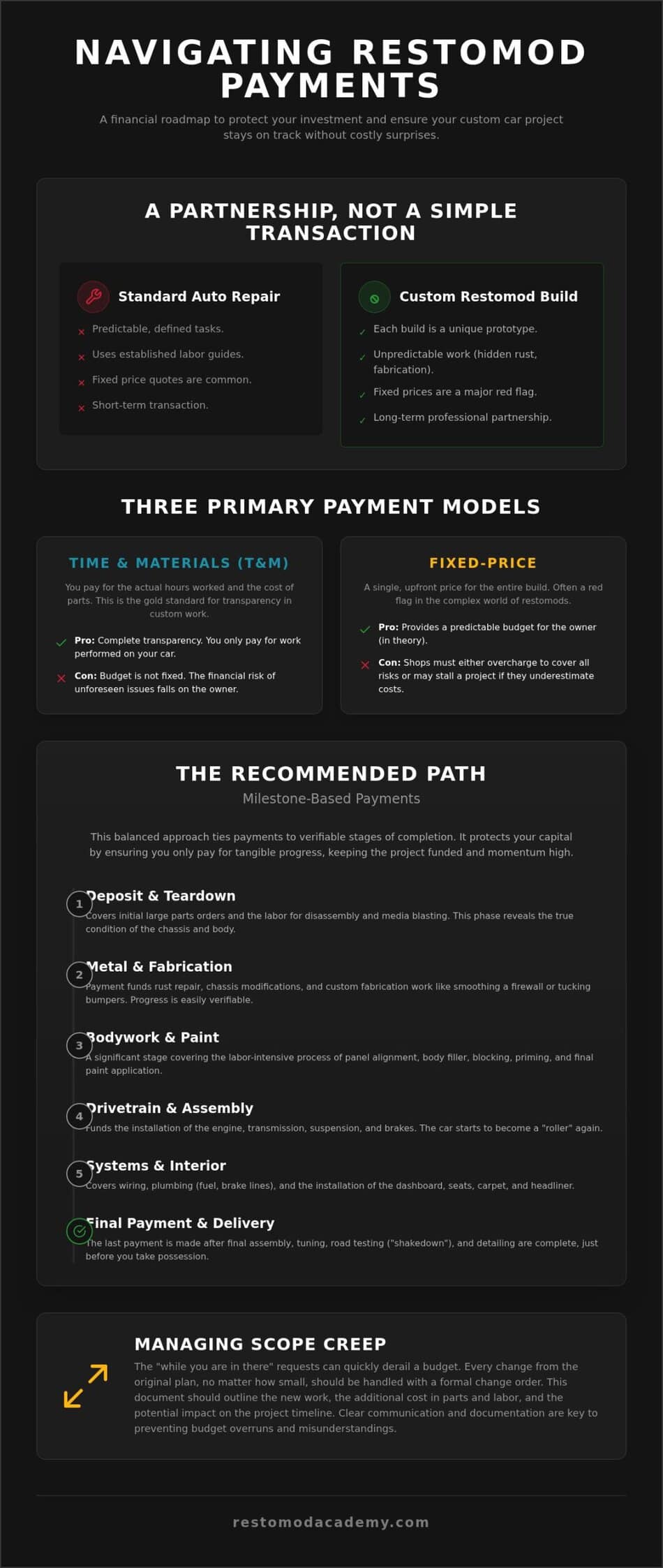
Entering a high-end shop for a full build is fundamentally different from dropping your daily driver off for a simple brake job. Standard repairs rely on established labor guides that dictate exactly how many minutes a technician needs for a specific task. In the world of conservation and restoration of road vehicles, those guides simply don’t exist. You are entering a long term partnership where the shop is as much an engineering firm as it is a repair facility. Understanding a restomod shop’s payment schedule starts with accepting that vintage metal is inherently unpredictable. Hidden rust, previous poor repairs, and metal fatigue only reveal themselves once the teardown begins, making a standard “menu price” impossible.
To better understand how a professional builder manages these variables through specific billing structures, watch this helpful video:
Fixed price quotes are often a massive red flag in the custom world. If a shop gives you a hard number before they’ve even blasted the chassis, they’re either overcharging you significantly to cover every possible disaster or they’re underestimating the work. The latter is far more dangerous. When a shop realizes they’re losing money on a fixed-price contract, your car gets pushed to the back of the building while they focus on profitable work. Progress based billing has become the industry standard because it ensures the shop stays solvent while you only pay for the actual work performed on your specific machine.
The Complexity of Custom Fabrication and Sourcing
Every restomod is essentially a prototype. In 2026, parts lead times for bespoke suspension components or high performance crate engines can stretch into several months, which directly impacts how a shop manages its floor space and cash flow. Labor hours for one off fabrication, such as tucking bumpers or modifying a firewall for a modern drivetrain, cannot be standardized. This complexity requires a payment roadmap that is flexible enough to handle technical hurdles while remaining transparent about where every hour of labor is spent. You aren’t just paying for a part; you’re paying for the skill required to make that part live in harmony with 50 year old steel.
Cash Flow vs Project Momentum
Project momentum is a fragile thing in a restoration environment. A shop is a business with significant overhead, and consistent billing ensures that your car remains a priority on the lift. When payments stall, the shop owner has no choice but to move technicians to a project that is currently funded. This is the primary reason cars end up as “garage furniture” for years. A disciplined approach to understanding a restomod shop’s payment schedule keeps the shop motivated and ensures you receive regular updates on the precision work being performed. It turns a potentially stressful financial interaction into a steady, methodical march toward the finish line.
The Three Primary Payment Models Used by Restomod Shops
Selecting the right financial structure for your build is as critical as choosing the right engine platform. It sets the rhythm for the entire project and defines how you and your builder interact. Most professional shops in 2026 lean toward one of three specific billing structures. Understanding a restomod shop’s payment schedule requires you to look past the bottom line and see how the shop manages its operational risk versus your personal budget. Each model has its own logic, designed to keep the lights on in the shop while ensuring your car receives the meticulous attention it deserves.
Time and Materials (T&M) Deep Dive
This is the gold standard for elite shops because it’s the most honest way to bill for unpredictable custom work. In this model, you pay for every actual hour a technician spends on your car plus the cost of parts and sublet services like upholstery or chrome plating. Shops typically provide bi-weekly or monthly invoices with detailed line items. While this offers total transparency, it places the risk of budget overruns on the owner. To better visualize the labor hours involved in major upgrades, you might consult the definitive guide to an LS engine swap, which highlights the precision steps that drive these labor costs.
Fixed Price and Capped Labor Models
A fixed price contract sounds appealing because it promises a hard ceiling on your total spend. However, these are remarkably rare for full, frame-off builds. Most shops only offer them for very defined phases, such as a specific paint job or a suspension kit installation where the variables are known. A “cap” is a contractual limit on labor hours for a specific task. Be cautious with these. If a shop underestimates a fixed quote, they may feel pressured to cut corners to avoid a financial loss. It’s always better to have a realistic, flexible budget than a rigid quote that leads to compromised craftsmanship.
The hybrid model is a common middle ground. It often features fixed labor costs for standardized assembly tasks while keeping metalwork and electrical diagnostics on a T&M basis. This balances the risk between both parties. Before you sign any agreement, check your consumer rights under the Motor Vehicle Repair Act to ensure your contract includes the necessary protections against unauthorized charges or significant deviations from estimates. Choosing the right model depends on your comfort with technical variables. If you’re feeling overwhelmed by the technical jargon in a proposed shop contract, Restomod Consulting Services can provide a professional second opinion to keep your investment secure.
Breaking Down the Milestone Payment Schedule
Think of a milestone schedule as the structural skeleton of your project’s finances. It provides rigidity and support, ensuring the build doesn’t collapse under the weight of poor planning. Instead of billing by the calendar, a professional shop ties payments to the physical completion of specific stages. This method aligns your financial output with the tangible progress in the shop. By understanding a restomod shop’s payment schedule through this lens, you transform a series of invoices into a project management tool that keeps both you and the builder accountable for the 2026 completion date.
The Initial Deposit and Procurement Phase
In 2026, a typical deposit for a high end restomod shop ranges from 10% to 25% of the estimated total. This initial investment serves two critical purposes. First, it secures your spot in the shop’s production queue, which is vital given the high demand for quality craftsmanship. Second, it funds the procurement of long lead items like custom chassis systems or bespoke crate engines. You should verify that this money is allocated to your specific project rather than general shop overhead. To ensure you’re paying fair market rates for high performance components, consult our recommended gear list to cross reference current parts pricing before the first check is cut.
Progress Payments for Major Build Segments
Once the teardown is complete and the metalwork begins, you move into the meat of the build. Typical milestones include the completion of the chassis and suspension upgrades, followed by the engine and drivetrain installation. Each of these segments represents a significant addition of value to your vehicle. Paint and bodywork often require their own specific payment schedule because of the intense labor and high material costs involved in achieving a show quality finish. This stage is where many projects stall. Maintaining a steady flow of capital here ensures that your car doesn’t get pushed to a corner while the shop waits for funds to buy the next round of epoxy primer or clear coat.
Final Delivery and Retainage
Never pay the full balance until the car is actually finished and tested. A professional agreement should include a retainage clause, where you hold back 5% to 10% of the total cost until the final “shake down” period is complete. This period is essential for catching the small gremlins that inevitably appear in a complex custom build, such as a minor fluid leak or a rattling interior panel. You and the builder should walk through a final punch list together. Once every item on that list is addressed and the car performs to the standards outlined in your blueprints, you can release the final payment with total confidence in your machine’s reliability.
Understanding a restomod shop’s payment schedule isn’t just about protecting your wallet; it’s about respecting the craft. A well structured schedule provides the shop with the resources they need to do their best work while giving you the transparency you deserve. It turns the financial side of the build into a methodical, rewarding journey that mirrors the precision of the restoration itself.
Navigating Scope Creep and Budget Overruns
Scope creep is the silent predator of the custom car world. It begins when the original project boundaries start to blur, leading to a slow, expensive expansion of work that wasn’t in the initial contract. This is where understanding a restomod shop’s payment schedule becomes most difficult; unplanned tasks mean unplanned invoices. Whether it’s a sudden desire for a more complex independent rear suspension or a decision to smooth out the engine bay, every addition has a ripple effect on both the timeline and your bank account. You must recognize that every “small” change requires a reset of your financial expectations.
The “while you are in there” mentality is the single greatest threat to your 2026 completion date. It sounds logical to upgrade the wiring harness since the dash is already apart, but these small pivots accumulate into thousands of dollars in extra labor. Before you green light any mid build change, ask yourself if the upgrade aligns with the car’s primary purpose. If you’re building a reliable driver and the change is purely for show quality aesthetics, it might be a distraction that drains your contingency fund without adding functional value. Stay focused on the mechanical soul of the machine rather than chasing every new trend that pops up on social media.
The Importance of Change Orders
Professionalism in the workshop requires that every deviation from the original plan is documented through a formal Change Order. This document should detail the specific task, the additional parts required, and the labor hours involved. Never rely on a verbal agreement over the roar of a shop fan. Change orders keep your financial roadmap clear and prevent bill shock at the end of a milestone. Some shops bill these changes immediately to keep cash flow steady, while others add them to the next scheduled payment. Regardless of the timing, having a paper trail ensures that both you and the builder are looking at the same set of numbers. To prevent these surprises from the start, download The Ultimate Restomod Guide to build a comprehensive plan before the first bolt is turned.
Managing Your Own Expectations
Building a custom car is an emotional journey, and it’s easy to get caught up in the excitement of a new performance part. You must remain the disciplined project manager of your own build. Set aside a 20% contingency fund in your personal budget specifically for the “known unknowns” that vintage metal always hides. This isn’t money for extra chrome; it’s a safety net for the structural surprises that only appear after media blasting. You are in control of the scope. If the budget is getting tight, have the courage to say no to non essential upgrades to keep the project moving toward the finish line. Discipline in the office is what allows for precision in the garage.
Mastering Your Project Finances with the Ultimate Restomod Guide
Education is the most powerful tool in your arsenal for preventing financial disputes. When you possess a deep understanding of the technical sequence required for a restoration, you gain the ability to verify the work behind every invoice. You no longer have to wonder if a specific billing cycle matches the physical progress in the shop. Understanding a restomod shop’s payment schedule becomes a logical extension of your technical knowledge. This transparency transforms the builder-owner relationship from one of suspicion into a true partnership dedicated to a shared creative adventure.
Don’t just write a check and hope for the best. Take charge of the project’s direction by becoming an informed advocate for your machine. Whether you are performing the labor yourself or hiring a professional team for a 2026 debut, knowing the “why” behind every mechanical decision keeps the project moving forward. It allows you to spot potential issues before they become expensive change orders, ensuring that your capital is always working toward the ultimate goal of modern reliability and classic style.
Using Project Blueprints to Save Money
Indecision is the primary driver of high labor costs in a custom shop. If a builder has to spend hours “figuring out” how to integrate a specific component because you haven’t provided a clear path, you are paying for their research and development time. Using Premium Project Blueprints provides a technical roadmap that reduces ambiguity. For instance, following the steps in the definitive guide to an LS engine swap gives the shop a proven framework, which significantly cuts down on experimental labor hours. If you are currently reviewing a shop’s proposed timeline, our Restomod Consulting Services can provide a professional second opinion on the payment schedule to ensure it is fair and milestone based.
Why Education is Your Best Investment
Knowledgeable owners are a shop’s favorite type of client because they understand the meticulous nature of the work. When you speak the language of specialized mechanical terminology, communication becomes efficient and precise. The Ultimate Restomod Guide provides this educational foundation, breaking down daunting technical tasks into achievable, logical steps. It bridges the gap between the practical labor of the workshop and the artistry of design. By investing in your own expertise, you ensure that every dollar spent is an investment in precision rather than a fee for poor planning. Join our community of enthusiasts today and use the guide to start your journey with the confidence of a seasoned mentor. Your project deserves the clarity that only education can provide.
Build with Confidence and Financial Clarity
You’ve discovered that a restomod isn’t a standard repair; it’s a deep engineering partnership. Mastering the flow of capital is just as vital as mastering the flow of torque. By understanding a restomod shop’s payment schedule, you move from a place of anxiety to a position of informed authority. You now know how to leverage milestone based billing and formal change orders to keep your 2026 project moving forward without the fear of a financial black hole.
Ready to turn that vision into a high performance reality? Take control of your build with The Ultimate Restomod Guide. Get the expert guidance of Brook Walsh and access comprehensive blueprints for complex tasks within a community focused on supporting both beginners and pros. Your dream car is waiting in the workshop. Go build it with precision and the peace of mind you deserve.
Frequently Asked Questions
How much of a deposit is normal for a restomod shop?
A deposit between 10% and 25% is the standard range for professional shops in 2026. This initial payment secures your build slot and provides the capital required to order long-lead components like custom chassis or specialized crate engines. It’s essential to confirm that these funds are allocated specifically to your project’s materials. If you’re unsure about a shop’s request, Restomod Consulting Services can help you review the proposal to ensure it aligns with industry norms.
Should I pay for parts upfront or as they are installed?
You should expect to pay for major parts upfront to ensure they are on-site when the build reaches the relevant phase. In 2026, supply chain delays make early procurement a necessity for maintaining project momentum. While labor is typically billed as work is performed, paying for components early protects you from price increases. It also ensures the shop doesn’t stall while waiting for a backordered transmission or a custom suspension kit.
What happens if the shop goes over the estimated budget?
The outcome depends on whether you have a Time and Materials or a Fixed-Price contract. In a T&M model, you are generally responsible for the additional hours, which is why understanding a restomod shop’s payment schedule and tracking progress is vital. If the overrun stems from a deviation in the original plan, a formal change order must be drafted to document the new costs. Clear communication prevents these surprises from turning into heated disputes.
Can I negotiate the payment schedule with a custom shop?
Yes, you can and should negotiate a schedule that ties payments to tangible build milestones. Most professional builders are willing to align their billing with the completion of major segments, such as the chassis, drivetrain, or bodywork. This structure protects your investment by ensuring money is only released after work is verified. Use The Ultimate Restomod Guide to understand which milestones are the most logical points for these financial transitions during the build.
Is it better to pay a shop weekly or by build milestone?
Milestone-based payments are generally superior for large scale projects because they link your financial output directly to physical progress. Weekly billing can sometimes lead to a scenario where money is spent without a clear sense of how much of the project is actually finished. Milestone billing keeps the shop focused on completing specific tasks, such as finishing the electrical system or plumbing the brakes, before the next round of funding is released for the interior.
What is a change order and why is it important for my bill?
A change order is a written document that records any modification to the original build plan. It is critical because it prevents verbal agreements from causing confusion when the final bill arrives. Every time you decide to upgrade a component or alter a design detail, the change order should outline the new parts cost and the expected labor hours. This paper trail is your best defense against scope creep during a long restoration.
How do I know if I am being overcharged for labor hours?
The best way to verify labor hours is through education and the use of Premium Project Blueprints. By knowing exactly what steps are required for a task like a modern engine swap, you can estimate whether the hours billed are reasonable for the level of craftsmanship provided. If the shop’s invoices seem inflated compared to industry standards, having a technical guide allows you to ask specific, informed questions about the fabrication process.
Should I use a third-party financing plan for a restomod?
Financing is a personal financial decision, but you must prioritize protecting your equity in the vehicle. Restomod projects often exceed their eventual resale value, so it’s wise to fund the build with capital you can afford to allocate. If you choose to finance, ensure the payment schedule remains milestone-based so the lender only releases funds as the car gains value. Always focus on maintaining a healthy contingency fund for the inevitable surprises of vintage metal.
What if the most dangerous part of your restomod project isn’t a rusted out floor pan or a faulty wiring harness, but the way you pay for it? It’s a common story in the garage. You hand over a massive deposit with dreams of a 2026 debut, only to watch your car sit untouched while the shop owner uses your funds to finish someone else’s project. You’re right to feel anxious about the black hole where money disappears and progress grinds to a halt. It’s frustrating when you can’t get a fixed price quote for a complex build, but there’s a better way to manage the flow of capital.
By understanding a restomod shop’s payment schedule, you can protect your investment and ensure every dollar goes toward the parts and labor for your specific machine. You deserve the peace of mind that comes with a transparent financial roadmap. This guide will teach you how to navigate milestone based payments and negotiate a fair contract that keeps your project on track. We’ll break down the logic behind why custom shops bill the way they do and how you can ensure your money translates into the high performance reality you’ve been planning.
Key Takeaways
- Learn why restomod builds function as a professional partnership rather than a simple transaction, requiring a more nuanced financial approach than standard automotive repair.
- Gain a significant advantage by understanding a restomod shop’s payment schedule, including how to structure milestones that protect your capital throughout the build.
- Compare the specific mechanics of Time and Materials versus Fixed-Price contracts to decide which model best fits your 2026 project requirements.
- Identify the common causes of scope creep and learn practical strategies to manage the “while you are in there” requests that can derail a custom budget.
- Discover how to use The Ultimate Restomod Guide to verify technical progress and ensure every shop invoice aligns with the physical work performed on your machine.
Why Custom Build Payments Differ from Standard Auto Repair
Entering a high-end shop for a full build is fundamentally different from dropping your daily driver off for a simple brake job. Standard repairs rely on established labor guides that dictate exactly how many minutes a technician needs for a specific task. In the world of conservation and restoration of road vehicles, those guides simply don’t exist. You are entering a long term partnership where the shop is as much an engineering firm as it is a repair facility. Understanding a restomod shop’s payment schedule starts with accepting that vintage metal is inherently unpredictable. Hidden rust, previous poor repairs, and metal fatigue only reveal themselves once the teardown begins, making a standard “menu price” impossible.
To better understand how a professional builder manages these variables through specific billing structures, watch this helpful video:
Fixed price quotes are often a massive red flag in the custom world. If a shop gives you a hard number before they’ve even blasted the chassis, they’re either overcharging you significantly to cover every possible disaster or they’re underestimating the work. The latter is far more dangerous. When a shop realizes they’re losing money on a fixed-price contract, your car gets pushed to the back of the building while they focus on profitable work. Progress based billing has become the industry standard because it ensures the shop stays solvent while you only pay for the actual work performed on your specific machine.
The Complexity of Custom Fabrication and Sourcing
Every restomod is essentially a prototype. In 2026, parts lead times for bespoke suspension components or high performance crate engines can stretch into several months, which directly impacts how a shop manages its floor space and cash flow. Labor hours for one off fabrication, such as tucking bumpers or modifying a firewall for a modern drivetrain, cannot be standardized. This complexity requires a payment roadmap that is flexible enough to handle technical hurdles while remaining transparent about where every hour of labor is spent. You aren’t just paying for a part; you’re paying for the skill required to make that part live in harmony with 50 year old steel.
Cash Flow vs Project Momentum
Project momentum is a fragile thing in a restoration environment. A shop is a business with significant overhead, and consistent billing ensures that your car remains a priority on the lift. When payments stall, the shop owner has no choice but to move technicians to a project that is currently funded. This is the primary reason cars end up as “garage furniture” for years. A disciplined approach to understanding a restomod shop’s payment schedule keeps the shop motivated and ensures you receive regular updates on the precision work being performed. It turns a potentially stressful financial interaction into a steady, methodical march toward the finish line.
The Three Primary Payment Models Used by Restomod Shops
Selecting the right financial structure for your build is as critical as choosing the right engine platform. It sets the rhythm for the entire project and defines how you and your builder interact. Most professional shops in 2026 lean toward one of three specific billing structures. Understanding a restomod shop’s payment schedule requires you to look past the bottom line and see how the shop manages its operational risk versus your personal budget. Each model has its own logic, designed to keep the lights on in the shop while ensuring your car receives the meticulous attention it deserves.
Time and Materials (T&M) Deep Dive
This is the gold standard for elite shops because it’s the most honest way to bill for unpredictable custom work. In this model, you pay for every actual hour a technician spends on your car plus the cost of parts and sublet services like upholstery or chrome plating. Shops typically provide bi-weekly or monthly invoices with detailed line items. While this offers total transparency, it places the risk of budget overruns on the owner. To better visualize the labor hours involved in major upgrades, you might consult the definitive guide to an LS engine swap, which highlights the precision steps that drive these labor costs.
Fixed Price and Capped Labor Models
A fixed price contract sounds appealing because it promises a hard ceiling on your total spend. However, these are remarkably rare for full, frame-off builds. Most shops only offer them for very defined phases, such as a specific paint job or a suspension kit installation where the variables are known. A “cap” is a contractual limit on labor hours for a specific task. Be cautious with these. If a shop underestimates a fixed quote, they may feel pressured to cut corners to avoid a financial loss. It’s always better to have a realistic, flexible budget than a rigid quote that leads to compromised craftsmanship.
The hybrid model is a common middle ground. It often features fixed labor costs for standardized assembly tasks while keeping metalwork and electrical diagnostics on a T&M basis. This balances the risk between both parties. Before you sign any agreement, check your consumer rights under the Motor Vehicle Repair Act to ensure your contract includes the necessary protections against unauthorized charges or significant deviations from estimates. Choosing the right model depends on your comfort with technical variables. If you’re feeling overwhelmed by the technical jargon in a proposed shop contract, Restomod Consulting Services can provide a professional second opinion to keep your investment secure.
Breaking Down the Milestone Payment Schedule
Think of a milestone schedule as the structural skeleton of your project’s finances. It provides rigidity and support, ensuring the build doesn’t collapse under the weight of poor planning. Instead of billing by the calendar, a professional shop ties payments to the physical completion of specific stages. This method aligns your financial output with the tangible progress in the shop. By understanding a restomod shop’s payment schedule through this lens, you transform a series of invoices into a project management tool that keeps both you and the builder accountable for the 2026 completion date.
The Initial Deposit and Procurement Phase
In 2026, a typical deposit for a high end restomod shop ranges from 10% to 25% of the estimated total. This initial investment serves two critical purposes. First, it secures your spot in the shop’s production queue, which is vital given the high demand for quality craftsmanship. Second, it funds the procurement of long lead items like custom chassis systems or bespoke crate engines. You should verify that this money is allocated to your specific project rather than general shop overhead. To ensure you’re paying fair market rates for high performance components, consult our recommended gear list to cross reference current parts pricing before the first check is cut.
Progress Payments for Major Build Segments
Once the teardown is complete and the metalwork begins, you move into the meat of the build. Typical milestones include the completion of the chassis and suspension upgrades, followed by the engine and drivetrain installation. Each of these segments represents a significant addition of value to your vehicle. Paint and bodywork often require their own specific payment schedule because of the intense labor and high material costs involved in achieving a show quality finish. This stage is where many projects stall. Maintaining a steady flow of capital here ensures that your car doesn’t get pushed to a corner while the shop waits for funds to buy the next round of epoxy primer or clear coat.
Final Delivery and Retainage
Never pay the full balance until the car is actually finished and tested. A professional agreement should include a retainage clause, where you hold back 5% to 10% of the total cost until the final “shake down” period is complete. This period is essential for catching the small gremlins that inevitably appear in a complex custom build, such as a minor fluid leak or a rattling interior panel. You and the builder should walk through a final punch list together. Once every item on that list is addressed and the car performs to the standards outlined in your blueprints, you can release the final payment with total confidence in your machine’s reliability.
Understanding a restomod shop’s payment schedule isn’t just about protecting your wallet; it’s about respecting the craft. A well structured schedule provides the shop with the resources they need to do their best work while giving you the transparency you deserve. It turns the financial side of the build into a methodical, rewarding journey that mirrors the precision of the restoration itself.
Navigating Scope Creep and Budget Overruns
Scope creep is the silent predator of the custom car world. It begins when the original project boundaries start to blur, leading to a slow, expensive expansion of work that wasn’t in the initial contract. This is where understanding a restomod shop’s payment schedule becomes most difficult; unplanned tasks mean unplanned invoices. Whether it’s a sudden desire for a more complex independent rear suspension or a decision to smooth out the engine bay, every addition has a ripple effect on both the timeline and your bank account. You must recognize that every “small” change requires a reset of your financial expectations.
The “while you are in there” mentality is the single greatest threat to your 2026 completion date. It sounds logical to upgrade the wiring harness since the dash is already apart, but these small pivots accumulate into thousands of dollars in extra labor. Before you green light any mid build change, ask yourself if the upgrade aligns with the car’s primary purpose. If you’re building a reliable driver and the change is purely for show quality aesthetics, it might be a distraction that drains your contingency fund without adding functional value. Stay focused on the mechanical soul of the machine rather than chasing every new trend that pops up on social media.
The Importance of Change Orders
Professionalism in the workshop requires that every deviation from the original plan is documented through a formal Change Order. This document should detail the specific task, the additional parts required, and the labor hours involved. Never rely on a verbal agreement over the roar of a shop fan. Change orders keep your financial roadmap clear and prevent bill shock at the end of a milestone. Some shops bill these changes immediately to keep cash flow steady, while others add them to the next scheduled payment. Regardless of the timing, having a paper trail ensures that both you and the builder are looking at the same set of numbers. To prevent these surprises from the start, download The Ultimate Restomod Guide to build a comprehensive plan before the first bolt is turned.
Managing Your Own Expectations
Building a custom car is an emotional journey, and it’s easy to get caught up in the excitement of a new performance part. You must remain the disciplined project manager of your own build. Set aside a 20% contingency fund in your personal budget specifically for the “known unknowns” that vintage metal always hides. This isn’t money for extra chrome; it’s a safety net for the structural surprises that only appear after media blasting. You are in control of the scope. If the budget is getting tight, have the courage to say no to non essential upgrades to keep the project moving toward the finish line. Discipline in the office is what allows for precision in the garage.
Mastering Your Project Finances with the Ultimate Restomod Guide
Education is the most powerful tool in your arsenal for preventing financial disputes. When you possess a deep understanding of the technical sequence required for a restoration, you gain the ability to verify the work behind every invoice. You no longer have to wonder if a specific billing cycle matches the physical progress in the shop. Understanding a restomod shop’s payment schedule becomes a logical extension of your technical knowledge. This transparency transforms the builder-owner relationship from one of suspicion into a true partnership dedicated to a shared creative adventure.
Don’t just write a check and hope for the best. Take charge of the project’s direction by becoming an informed advocate for your machine. Whether you are performing the labor yourself or hiring a professional team for a 2026 debut, knowing the “why” behind every mechanical decision keeps the project moving forward. It allows you to spot potential issues before they become expensive change orders, ensuring that your capital is always working toward the ultimate goal of modern reliability and classic style.
Using Project Blueprints to Save Money
Indecision is the primary driver of high labor costs in a custom shop. If a builder has to spend hours “figuring out” how to integrate a specific component because you haven’t provided a clear path, you are paying for their research and development time. Using Premium Project Blueprints provides a technical roadmap that reduces ambiguity. For instance, following the steps in the definitive guide to an LS engine swap gives the shop a proven framework, which significantly cuts down on experimental labor hours. If you are currently reviewing a shop’s proposed timeline, our Restomod Consulting Services can provide a professional second opinion on the payment schedule to ensure it is fair and milestone based.
Why Education is Your Best Investment
Knowledgeable owners are a shop’s favorite type of client because they understand the meticulous nature of the work. When you speak the language of specialized mechanical terminology, communication becomes efficient and precise. The Ultimate Restomod Guide provides this educational foundation, breaking down daunting technical tasks into achievable, logical steps. It bridges the gap between the practical labor of the workshop and the artistry of design. By investing in your own expertise, you ensure that every dollar spent is an investment in precision rather than a fee for poor planning. Join our community of enthusiasts today and use the guide to start your journey with the confidence of a seasoned mentor. Your project deserves the clarity that only education can provide.
Build with Confidence and Financial Clarity
You’ve discovered that a restomod isn’t a standard repair; it’s a deep engineering partnership. Mastering the flow of capital is just as vital as mastering the flow of torque. By understanding a restomod shop’s payment schedule, you move from a place of anxiety to a position of informed authority. You now know how to leverage milestone based billing and formal change orders to keep your 2026 project moving forward without the fear of a financial black hole.
Ready to turn that vision into a high performance reality? Take control of your build with The Ultimate Restomod Guide. Get the expert guidance of Brook Walsh and access comprehensive blueprints for complex tasks within a community focused on supporting both beginners and pros. Your dream car is waiting in the workshop. Go build it with precision and the peace of mind you deserve.
Frequently Asked Questions
How much of a deposit is normal for a restomod shop?
A deposit between 10% and 25% is the standard range for professional shops in 2026. This initial payment secures your build slot and provides the capital required to order long-lead components like custom chassis or specialized crate engines. It’s essential to confirm that these funds are allocated specifically to your project’s materials. If you’re unsure about a shop’s request, Restomod Consulting Services can help you review the proposal to ensure it aligns with industry norms.
Should I pay for parts upfront or as they are installed?
You should expect to pay for major parts upfront to ensure they are on-site when the build reaches the relevant phase. In 2026, supply chain delays make early procurement a necessity for maintaining project momentum. While labor is typically billed as work is performed, paying for components early protects you from price increases. It also ensures the shop doesn’t stall while waiting for a backordered transmission or a custom suspension kit.
What happens if the shop goes over the estimated budget?
The outcome depends on whether you have a Time and Materials or a Fixed-Price contract. In a T&M model, you are generally responsible for the additional hours, which is why understanding a restomod shop’s payment schedule and tracking progress is vital. If the overrun stems from a deviation in the original plan, a formal change order must be drafted to document the new costs. Clear communication prevents these surprises from turning into heated disputes.
Can I negotiate the payment schedule with a custom shop?
Yes, you can and should negotiate a schedule that ties payments to tangible build milestones. Most professional builders are willing to align their billing with the completion of major segments, such as the chassis, drivetrain, or bodywork. This structure protects your investment by ensuring money is only released after work is verified. Use The Ultimate Restomod Guide to understand which milestones are the most logical points for these financial transitions during the build.
Is it better to pay a shop weekly or by build milestone?
Milestone-based payments are generally superior for large scale projects because they link your financial output directly to physical progress. Weekly billing can sometimes lead to a scenario where money is spent without a clear sense of how much of the project is actually finished. Milestone billing keeps the shop focused on completing specific tasks, such as finishing the electrical system or plumbing the brakes, before the next round of funding is released for the interior.
What is a change order and why is it important for my bill?
A change order is a written document that records any modification to the original build plan. It is critical because it prevents verbal agreements from causing confusion when the final bill arrives. Every time you decide to upgrade a component or alter a design detail, the change order should outline the new parts cost and the expected labor hours. This paper trail is your best defense against scope creep during a long restoration.
How do I know if I am being overcharged for labor hours?
The best way to verify labor hours is through education and the use of Premium Project Blueprints. By knowing exactly what steps are required for a task like a modern engine swap, you can estimate whether the hours billed are reasonable for the level of craftsmanship provided. If the shop’s invoices seem inflated compared to industry standards, having a technical guide allows you to ask specific, informed questions about the fabrication process.
Should I use a third-party financing plan for a restomod?
Financing is a personal financial decision, but you must prioritize protecting your equity in the vehicle. Restomod projects often exceed their eventual resale value, so it’s wise to fund the build with capital you can afford to allocate. If you choose to finance, ensure the payment schedule remains milestone-based so the lender only releases funds as the car gains value. Always focus on maintaining a healthy contingency fund for the inevitable surprises of vintage metal.