
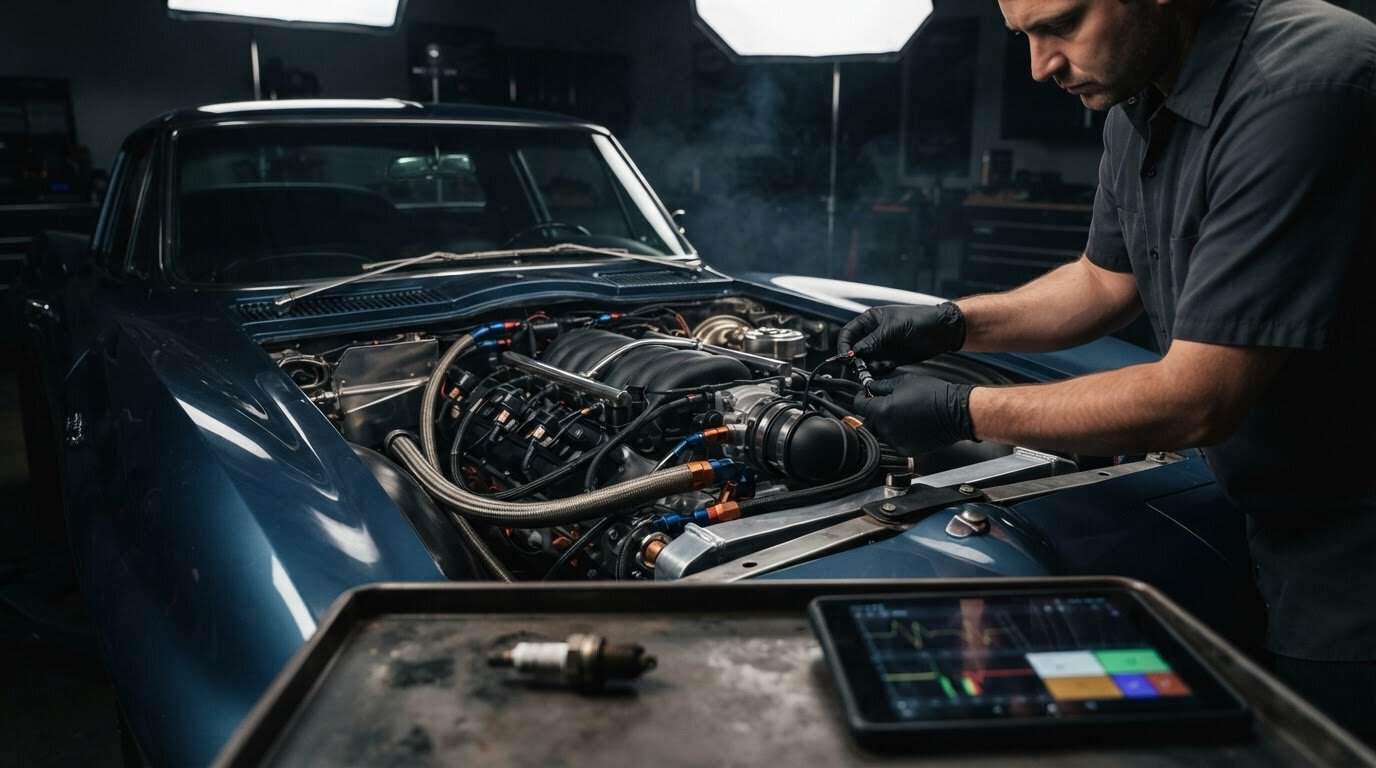
If you’re asking why my new EFI system runs rich at idle, don’t assume the first fix is a fuel-map change. A strong fuel odor, uneven idle, or black soot on the spark plugs can point to a rich condition, but they can also have other causes. A new system may reveal installation or hardware problems that tuning alone won’t fix.
Start with evidence, not guesses. Continuing to run excessively rich can foul components, while changing settings without a clear reason can make the original fault harder to find. A data log can help you determine whether the ECU is responding to incorrect sensor information or whether the base calibration needs attention.
This guide takes you through a prioritized check of symptoms, sensor readings, fuel pressure, wiring, and possible air or exhaust leaks. You’ll learn what to inspect before adjusting the tune, how to distinguish likely calibration issues from hardware faults, and when to pause and get experienced help. Procedures and values vary by EFI system, so verify each step against your manufacturer’s documentation.
Key Takeaways
- Learn which signs may suggest a rich idle and why symptoms alone don’t confirm the cause.
- Understand how sensor inputs and operating conditions affect EFI fuel delivery.
- Explore why my new EFI system runs rich at idle by comparing observations with safe next checks before changing calibration.
- Follow a measured diagnostic process: document symptoms, inspect the installation, review live data, and test one possibility at a time.
- Know when persistent problems call for experienced help, and what system details and saved logs to bring.
Why Does a New EFI System Run Rich at Idle?
A rich idle means the mixture contains more fuel than the engine can burn efficiently under its current operating conditions. If you’re asking why my new EFI system runs rich at idle, separate measurable data from observations. A strong fuel odor, dark exhaust, uneven running, or black, sooty spark plugs can be clues, but none proves the mixture is rich by itself.
Record when the symptoms occur: during a cold start, after the engine warms up, or at every idle. Compare your notes with the EFI system’s logged or displayed data. Air-fuel ratio (AFR) describes the proportion of air to fuel in the mixture. The appropriate target changes with conditions such as temperature and engine load, so use the target and procedure specified for your EFI system and engine, not a number copied from another build.
For a visual example of troubleshooting poor idle behavior, watch this video:
What does rich idle look and feel like?
Look for a pattern rather than relying on smell alone. Fuel odor may come from an exhaust or fuel-system issue, while rough idle can result from ignition, an air leak, or a mechanical problem. Soot on the plugs is another clue, but plug condition reflects more than one moment of engine operation. Treat the ECU’s AFR reading as evidence to investigate, not a final diagnosis, especially if sensor operation or installation is uncertain. Continued rich running can foul spark plugs. Check your engine and setup documentation for other potential risks.
Why new installations need a system-specific diagnosis
The Engine Control Unit (ECU) uses sensor inputs and its calibration to control fuel delivery. A mismatch in calibration, wiring, sensor signals, or fuel delivery can produce similar idle symptoms. Changing a fuel table before checking the installation may hide the cause. Another builder’s settings may not suit your engine, injectors, or hardware. Write down the EFI make and model, engine combination, and installation changes. Then use the system manual to verify values and procedures before making adjustments.
How EFI Sensors and Fuel Control Can Create a Rich Idle
Your EFI controller calculates injector commands using its calibration and the inputs it receives. These may include engine temperature, manifold pressure, throttle position, and oxygen-sensor feedback when the system is using it. If an input is implausible, the controller may calculate fuel delivery for conditions that aren’t actually present. The result could be a genuinely rich mixture, or data that gives a misleading picture of the mixture.
Air-fuel ratio (AFR) is the proportion of air to fuel in the mixture. The appropriate target depends on operating conditions, the engine, and the EFI setup. Use the targets and procedures in your system and engine documentation rather than treating one AFR as a universal idle setting.
Check coolant temperature, MAP signal, and oxygen-sensor data
After a cold soak, compare the coolant-temperature reading with the actual conditions, then watch the reading as the engine warms. A reading that doesn’t make sense may affect warm-up fueling. Check expected behavior in the EFI manual. Inspect the MAP hose, fittings, and electrical connection, then review whether logged pressure readings respond plausibly as the engine’s operating state changes. Verify the checks against your system documentation.
Review oxygen-sensor status and installation before deciding the sensor has failed. Its position, wiring, operating state, and exhaust integrity all matter. An upstream exhaust leak can introduce oxygen into the exhaust stream and distort feedback, potentially making the controller respond to a false lean signal. A displayed rich reading also needs context. Confirm that the sensor is operating correctly and installed as specified before treating the reading as proof of excess fuel.
Separate fuel-delivery problems from calibration problems
If the sensor information appears credible, investigate whether the engine is receiving more fuel than the calibration expects. Excessive fuel pressure, a leaking injector, or a fuel-control fault can contribute to a rich condition even when the tune isn’t the root cause. Don’t guess at pressure targets or use an improvised injector test. Follow the manufacturer’s procedure for your exact EFI system, and get experienced help if you can’t test safely.
Consider the whole engine combination. Camshaft characteristics, idle airflow, ignition timing, and other installation details can affect idle behavior and how the controller interprets engine load. A calibration that works on a different combination may not transfer. For builders working through a classic-car engine conversion, LS engine-swap guidance can help frame the wider installation, but it doesn’t replace the EFI manufacturer’s instructions.
When tracing why my new EFI system runs rich at idle, compare logged inputs with actual engine conditions, then test fuel delivery before changing calibration tables. Make only changes supported by the evidence.
Which Rich-Idle Causes Should You Check First?
Use the pattern of the fault to decide what to inspect. Don’t change fuel tables at the first sign of trouble. A rich symptom alone can’t identify the failed part. Similar behavior may come from sensor data, installation faults, fuel delivery, or calibration.
Start with your installation records, a visual check, and available live data. Compare what the engine is doing with what the EFI system reports.
| Observation | Possible causes | Next safe check |
|---|---|---|
| Rich behavior mainly during cold starts | Warm-up enrichment, coolant-temperature input, or startup calibration | Compare temperature data with actual engine conditions and review the system’s documented warm-up strategy. |
| Rich behavior continues after warm-up | Sensor input, fuel delivery, or closed-loop control issue | Check logged sensor readings and closed-loop status; confirm the system is operating as its manual describes. |
| Rich reading occurs only at idle | Idle airflow, vacuum leak, MAP signal, or idle-specific calibration | Inspect hoses and connections, then compare idle data with readings at other operating conditions. |
| Rich reading appears across operating conditions | Fuel pressure, injector leakage, sensor fault, or broader calibration mismatch | Review the logs for repeatable patterns before testing fuel delivery by the manufacturer’s procedure. |
Use symptoms and data to narrow the fault
Note whether the issue fades as the engine warms or remains at every idle. Next, check whether the reported rich condition appears only at idle or elsewhere too. Logs can help reveal implausible sensor readings, whether closed-loop operation is active, and whether the same pattern returns. Treat those findings as clues, not a diagnosis on their own.
Spot setup and installation issues before retuning
With the engine off, inspect accessible vacuum hoses, MAP plumbing, connectors, grounds, and wiring for loose or damaged connections. Check for exhaust leaks near the oxygen sensor, which can distort its feedback. Verify ignition synchronization and idle-air behavior using the exact EFI system’s instructions. Don’t use another builder’s AFR, fuel-pressure, or IAC targets as universal settings. Confirm each value for your system and engine in the manufacturer’s documentation.
If your EFI installation is part of a wider engine conversion, the classic-car LS engine-swap guide can provide broader project context. For the idle fault itself, follow the evidence from your own combination before retuning.
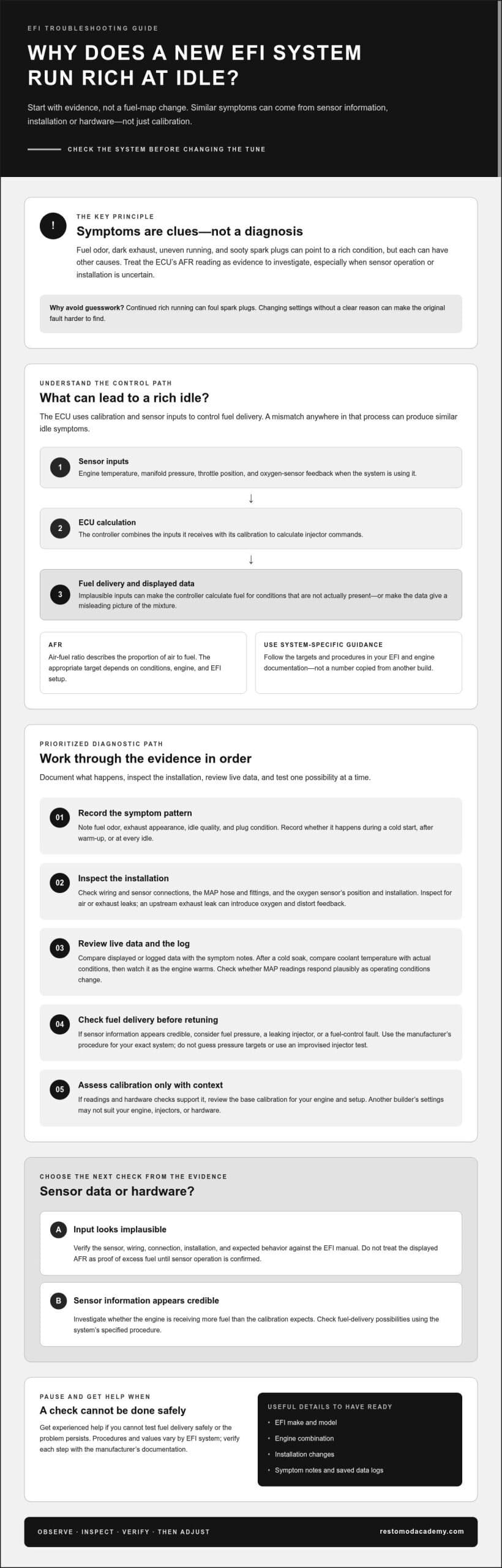
How to Diagnose a Rich Idle Without Chasing the Tune
Work in sequence. A disciplined process helps answer why my new EFI system runs rich at idle without turning calibration changes into guesswork. Before testing, review the exact EFI manual. Logging, sensor checks, fuel-pressure tests, and adjustment procedures differ by system. If you find a fuel leak, shut the engine off safely and address it before continuing. Stop and seek qualified help if testing seems unsafe or you’re unsure how to perform a check.
Record a baseline before making adjustments
Capture what the engine does before changing anything. Note whether it’s cold or warm, how it idles, whether there’s a fuel odor, and whether any warning indicators appear. Record recent installation or wiring changes that might be relevant. Save the current tune or configuration and a data log using the controller’s documented process. Write down any settings you may later adjust so you can review or restore them.
Test one likely cause at a time
Move from inspection to measurement, then to controlled changes. This order keeps the evidence useful:
- Inspect visible hoses, connectors, wiring, grounds, and the exhaust near the oxygen sensor. Correct an obvious installation issue before changing calibration.
- Review available logs for sensor readings and system status under the conditions where the fault occurs. Compare cold and warm behavior, and idle with other operating conditions.
- Test a suspected sensor, fuel-pressure issue, injector, or idle-control concern only by following the procedure for your exact EFI system. Use its specified equipment and values. Don’t assume another system’s targets apply.
- After a verified repair or a controlled adjustment, repeat the same operating conditions and record what changed.
Change one variable at a time. If you adjust several settings together, you won’t know which change helped or made the idle worse. Don’t copy another vehicle’s AFR, IAC, or enrichment values unless the EFI manufacturer’s documentation confirms they’re appropriate for your system and engine combination. Preserve each version of the configuration as you work.
Choose diagnostic tools based on the tests your system requires, and verify their proper use in its manual. For a general look at recommended workshop gear, focus on equipment relevant to careful inspection and measurement, and avoid tools you can’t safely operate.
Methodical troubleshooting is a learnable workshop skill. Keep your notes and logs together, and don’t retune until the installation and data give you a sound reason to do so.
When to Get EFI Help and How to Build on the Fix
Good troubleshooting includes knowing when to pause. If rich operation persists after basic installation checks, sensor faults remain unresolved, or you’re unsure how to test fuel pressure safely, stop making calibration changes and seek experienced help. Repeated adjustments without a verified cause can make the original problem harder to trace. Follow the EFI manufacturer’s support guidance for faults specific to your system.
Know when to stop adjusting and ask for help
Shut the engine down if you find a fuel leak, experience a severe misfire, or notice another condition that makes continued operation unsafe. Don’t keep running the engine just to collect more data when you’re concerned about damage or safety. An experienced technician or the system manufacturer’s support channel can help interpret unresolved faults and identify the next safe test.
Make the handoff useful. Gather the EFI make and model, engine combination, wiring or installation changes, a clear description of when symptoms occur, and any saved logs or configuration files. Include what you’ve inspected, tested, or changed, along with the results. This record helps someone assess why my new EFI system runs rich at idle without repeating steps or guessing at previous adjustments.
Use the diagnosis to strengthen the whole build
A dependable restomod is more than a successful startup. Reliable EFI operation depends on making the modern control system work with the engine and the character of the classic car. Keep the final verified configuration and note the repair or adjustment that resolved the issue. That documentation gives you a useful reference as the rest of the build develops.
If your project is LS-based, the definitive LS engine swap guide can support the broader conversion work. For other combinations, consult the instructions for your specific EFI system and engine rather than borrowing another setup’s values.
Restomod Academy’s educational resources offer guidance for the wider classic-car build journey. Keep the same disciplined approach at the next hurdle: diagnose with evidence, verify specifications against the right documentation, and preserve each successful change.
Build a More Reliable EFI Setup, One Check at a Time
If you’re still asking why my new EFI system runs rich at idle, resist the urge to treat every symptom as a tuning problem. Fuel odor or rough idle is a clue, not proof of the cause. Compare the ECU’s data with actual engine conditions, inspect installation details, and use the exact system documentation to guide tests and values.
Record what you observe, change one variable at a time, and preserve the original configuration. If the fault persists, a sensor remains unresolved, or a test feels unsafe, pause and seek experienced help with your notes and logs ready. This method supports a careful diagnosis and builds the skills that help make a classic car’s modern upgrades more dependable.
Restomod Academy shares educational guides and tutorials for classic-car restoration and modification. Explore Restomod Academy’s resources as you continue shaping your build. Trust verified evidence and take each step toward a reliable machine deliberately.
Frequently Asked Questions
Why is my new EFI system running rich at idle?
A rich idle can come from calibration, inaccurate sensor inputs, fuel delivery, or an installation issue. If you’re asking why my new EFI system runs rich at idle, treat fuel odor or rough running as clues, not proof of a rich mixture. Confirm what the controller reports, note whether the problem happens cold, warm, or both, and review the saved data. Check your exact EFI manual before changing settings.
Can a bad coolant temperature sensor make EFI run rich at idle?
An implausible coolant-temperature input can affect how the controller calculates fuel delivery, but the sensor is only one possible cause. Compare the logged temperature with actual engine conditions, including after a cold soak and as the engine warms. Inspect the sensor wiring and connections, too. Follow the controller manufacturer’s test procedure before replacing anything. Fuel odor or rough idle alone doesn’t confirm a faulty temperature sensor.
Can an exhaust leak make an EFI system seem rich at idle?
An exhaust leak near the oxygen sensor can affect sensor readings and the controller’s feedback, so a displayed AFR may not tell the whole story. The effect depends on the leak’s location and the EFI system’s design. Inspect the exhaust and sensor installation before retuning, then check the manufacturer’s diagnostic guidance for your setup. Don’t assume the sensor itself has failed based on a questionable reading alone.
How do I know if my EFI system is actually running rich at idle?
Use measured AFR and controller data to assess the mixture, while treating fuel smell, smoke, rough running, or fouled plugs as supporting clues rather than confirmation. Compare readings under repeatable conditions, both cold and warm, and review related sensor data and system status. Don’t assume one generic AFR number is right for every engine, fuel, or calibration. Use the target and test procedure specified for your exact EFI system and engine.
Can too much fuel pressure cause a rich idle with EFI?
Fuel pressure outside the range specified for your EFI setup can contribute to fueling problems. The correct specification and test method depend on the system, so use suitable equipment and follow the manufacturer’s procedure. Don’t borrow a pressure value from a forum post or another brand’s manual. If you’re uncertain about the test or result, stop and ask an experienced technician rather than adjusting calibration to compensate.
Should I adjust the idle AFR table if my new EFI runs rich?
Not until you’ve confirmed the rich condition and checked installation details, sensor data, and system configuration. Changing an AFR table may mask an underlying fault rather than fix it. Save the original tune first, then follow your controller’s documentation and change only one applicable setting at a time. Procedures vary with the controller, engine combination, and operating state, so don’t copy another vehicle’s values without verifying that they apply.
Is it safe to drive a classic car that is running rich at idle?
There isn’t a responsible blanket yes or no. Risk depends on the severity, duration, symptoms, and vehicle setup. Stop the engine if you find a fuel leak, experience a severe misfire, or notice another warning sign that makes continued operation unsafe. Persistent rich operation deserves prompt diagnosis because it can affect drivability and components. If you’re unsure whether the car is safe to run or drive, seek qualified help.
If you’re asking why my new EFI system runs rich at idle, don’t assume the first fix is a fuel-map change. A strong fuel odor, uneven idle, or black soot on the spark plugs can point to a rich condition, but they can also have other causes. A new system may reveal installation or hardware problems that tuning alone won’t fix.
Start with evidence, not guesses. Continuing to run excessively rich can foul components, while changing settings without a clear reason can make the original fault harder to find. A data log can help you determine whether the ECU is responding to incorrect sensor information or whether the base calibration needs attention.
This guide takes you through a prioritized check of symptoms, sensor readings, fuel pressure, wiring, and possible air or exhaust leaks. You’ll learn what to inspect before adjusting the tune, how to distinguish likely calibration issues from hardware faults, and when to pause and get experienced help. Procedures and values vary by EFI system, so verify each step against your manufacturer’s documentation.
Key Takeaways
- Learn which signs may suggest a rich idle and why symptoms alone don’t confirm the cause.
- Understand how sensor inputs and operating conditions affect EFI fuel delivery.
- Explore why my new EFI system runs rich at idle by comparing observations with safe next checks before changing calibration.
- Follow a measured diagnostic process: document symptoms, inspect the installation, review live data, and test one possibility at a time.
- Know when persistent problems call for experienced help, and what system details and saved logs to bring.
Why Does a New EFI System Run Rich at Idle?
A rich idle means the mixture contains more fuel than the engine can burn efficiently under its current operating conditions. If you’re asking why my new EFI system runs rich at idle, separate measurable data from observations. A strong fuel odor, dark exhaust, uneven running, or black, sooty spark plugs can be clues, but none proves the mixture is rich by itself.
Record when the symptoms occur: during a cold start, after the engine warms up, or at every idle. Compare your notes with the EFI system’s logged or displayed data. Air-fuel ratio (AFR) describes the proportion of air to fuel in the mixture. The appropriate target changes with conditions such as temperature and engine load, so use the target and procedure specified for your EFI system and engine, not a number copied from another build.
For a visual example of troubleshooting poor idle behavior, watch this video:
What does rich idle look and feel like?
Look for a pattern rather than relying on smell alone. Fuel odor may come from an exhaust or fuel-system issue, while rough idle can result from ignition, an air leak, or a mechanical problem. Soot on the plugs is another clue, but plug condition reflects more than one moment of engine operation. Treat the ECU’s AFR reading as evidence to investigate, not a final diagnosis, especially if sensor operation or installation is uncertain. Continued rich running can foul spark plugs. Check your engine and setup documentation for other potential risks.
Why new installations need a system-specific diagnosis
The Engine Control Unit (ECU) uses sensor inputs and its calibration to control fuel delivery. A mismatch in calibration, wiring, sensor signals, or fuel delivery can produce similar idle symptoms. Changing a fuel table before checking the installation may hide the cause. Another builder’s settings may not suit your engine, injectors, or hardware. Write down the EFI make and model, engine combination, and installation changes. Then use the system manual to verify values and procedures before making adjustments.
How EFI Sensors and Fuel Control Can Create a Rich Idle
Your EFI controller calculates injector commands using its calibration and the inputs it receives. These may include engine temperature, manifold pressure, throttle position, and oxygen-sensor feedback when the system is using it. If an input is implausible, the controller may calculate fuel delivery for conditions that aren’t actually present. The result could be a genuinely rich mixture, or data that gives a misleading picture of the mixture.
Air-fuel ratio (AFR) is the proportion of air to fuel in the mixture. The appropriate target depends on operating conditions, the engine, and the EFI setup. Use the targets and procedures in your system and engine documentation rather than treating one AFR as a universal idle setting.
Check coolant temperature, MAP signal, and oxygen-sensor data
After a cold soak, compare the coolant-temperature reading with the actual conditions, then watch the reading as the engine warms. A reading that doesn’t make sense may affect warm-up fueling. Check expected behavior in the EFI manual. Inspect the MAP hose, fittings, and electrical connection, then review whether logged pressure readings respond plausibly as the engine’s operating state changes. Verify the checks against your system documentation.
Review oxygen-sensor status and installation before deciding the sensor has failed. Its position, wiring, operating state, and exhaust integrity all matter. An upstream exhaust leak can introduce oxygen into the exhaust stream and distort feedback, potentially making the controller respond to a false lean signal. A displayed rich reading also needs context. Confirm that the sensor is operating correctly and installed as specified before treating the reading as proof of excess fuel.
Separate fuel-delivery problems from calibration problems
If the sensor information appears credible, investigate whether the engine is receiving more fuel than the calibration expects. Excessive fuel pressure, a leaking injector, or a fuel-control fault can contribute to a rich condition even when the tune isn’t the root cause. Don’t guess at pressure targets or use an improvised injector test. Follow the manufacturer’s procedure for your exact EFI system, and get experienced help if you can’t test safely.
Consider the whole engine combination. Camshaft characteristics, idle airflow, ignition timing, and other installation details can affect idle behavior and how the controller interprets engine load. A calibration that works on a different combination may not transfer. For builders working through a classic-car engine conversion, LS engine-swap guidance can help frame the wider installation, but it doesn’t replace the EFI manufacturer’s instructions.
When tracing why my new EFI system runs rich at idle, compare logged inputs with actual engine conditions, then test fuel delivery before changing calibration tables. Make only changes supported by the evidence.
Which Rich-Idle Causes Should You Check First?
Use the pattern of the fault to decide what to inspect. Don’t change fuel tables at the first sign of trouble. A rich symptom alone can’t identify the failed part. Similar behavior may come from sensor data, installation faults, fuel delivery, or calibration.
Start with your installation records, a visual check, and available live data. Compare what the engine is doing with what the EFI system reports.
| Observation | Possible causes | Next safe check |
|---|---|---|
| Rich behavior mainly during cold starts | Warm-up enrichment, coolant-temperature input, or startup calibration | Compare temperature data with actual engine conditions and review the system’s documented warm-up strategy. |
| Rich behavior continues after warm-up | Sensor input, fuel delivery, or closed-loop control issue | Check logged sensor readings and closed-loop status; confirm the system is operating as its manual describes. |
| Rich reading occurs only at idle | Idle airflow, vacuum leak, MAP signal, or idle-specific calibration | Inspect hoses and connections, then compare idle data with readings at other operating conditions. |
| Rich reading appears across operating conditions | Fuel pressure, injector leakage, sensor fault, or broader calibration mismatch | Review the logs for repeatable patterns before testing fuel delivery by the manufacturer’s procedure. |
Use symptoms and data to narrow the fault
Note whether the issue fades as the engine warms or remains at every idle. Next, check whether the reported rich condition appears only at idle or elsewhere too. Logs can help reveal implausible sensor readings, whether closed-loop operation is active, and whether the same pattern returns. Treat those findings as clues, not a diagnosis on their own.
Spot setup and installation issues before retuning
With the engine off, inspect accessible vacuum hoses, MAP plumbing, connectors, grounds, and wiring for loose or damaged connections. Check for exhaust leaks near the oxygen sensor, which can distort its feedback. Verify ignition synchronization and idle-air behavior using the exact EFI system’s instructions. Don’t use another builder’s AFR, fuel-pressure, or IAC targets as universal settings. Confirm each value for your system and engine in the manufacturer’s documentation.
If your EFI installation is part of a wider engine conversion, the classic-car LS engine-swap guide can provide broader project context. For the idle fault itself, follow the evidence from your own combination before retuning.
How to Diagnose a Rich Idle Without Chasing the Tune
Work in sequence. A disciplined process helps answer why my new EFI system runs rich at idle without turning calibration changes into guesswork. Before testing, review the exact EFI manual. Logging, sensor checks, fuel-pressure tests, and adjustment procedures differ by system. If you find a fuel leak, shut the engine off safely and address it before continuing. Stop and seek qualified help if testing seems unsafe or you’re unsure how to perform a check.
Record a baseline before making adjustments
Capture what the engine does before changing anything. Note whether it’s cold or warm, how it idles, whether there’s a fuel odor, and whether any warning indicators appear. Record recent installation or wiring changes that might be relevant. Save the current tune or configuration and a data log using the controller’s documented process. Write down any settings you may later adjust so you can review or restore them.
Test one likely cause at a time
Move from inspection to measurement, then to controlled changes. This order keeps the evidence useful:
- Inspect visible hoses, connectors, wiring, grounds, and the exhaust near the oxygen sensor. Correct an obvious installation issue before changing calibration.
- Review available logs for sensor readings and system status under the conditions where the fault occurs. Compare cold and warm behavior, and idle with other operating conditions.
- Test a suspected sensor, fuel-pressure issue, injector, or idle-control concern only by following the procedure for your exact EFI system. Use its specified equipment and values. Don’t assume another system’s targets apply.
- After a verified repair or a controlled adjustment, repeat the same operating conditions and record what changed.
Change one variable at a time. If you adjust several settings together, you won’t know which change helped or made the idle worse. Don’t copy another vehicle’s AFR, IAC, or enrichment values unless the EFI manufacturer’s documentation confirms they’re appropriate for your system and engine combination. Preserve each version of the configuration as you work.
Choose diagnostic tools based on the tests your system requires, and verify their proper use in its manual. For a general look at recommended workshop gear, focus on equipment relevant to careful inspection and measurement, and avoid tools you can’t safely operate.
Methodical troubleshooting is a learnable workshop skill. Keep your notes and logs together, and don’t retune until the installation and data give you a sound reason to do so.
When to Get EFI Help and How to Build on the Fix
Good troubleshooting includes knowing when to pause. If rich operation persists after basic installation checks, sensor faults remain unresolved, or you’re unsure how to test fuel pressure safely, stop making calibration changes and seek experienced help. Repeated adjustments without a verified cause can make the original problem harder to trace. Follow the EFI manufacturer’s support guidance for faults specific to your system.
Know when to stop adjusting and ask for help
Shut the engine down if you find a fuel leak, experience a severe misfire, or notice another condition that makes continued operation unsafe. Don’t keep running the engine just to collect more data when you’re concerned about damage or safety. An experienced technician or the system manufacturer’s support channel can help interpret unresolved faults and identify the next safe test.
Make the handoff useful. Gather the EFI make and model, engine combination, wiring or installation changes, a clear description of when symptoms occur, and any saved logs or configuration files. Include what you’ve inspected, tested, or changed, along with the results. This record helps someone assess why my new EFI system runs rich at idle without repeating steps or guessing at previous adjustments.
Use the diagnosis to strengthen the whole build
A dependable restomod is more than a successful startup. Reliable EFI operation depends on making the modern control system work with the engine and the character of the classic car. Keep the final verified configuration and note the repair or adjustment that resolved the issue. That documentation gives you a useful reference as the rest of the build develops.
If your project is LS-based, the definitive LS engine swap guide can support the broader conversion work. For other combinations, consult the instructions for your specific EFI system and engine rather than borrowing another setup’s values.
Restomod Academy’s educational resources offer guidance for the wider classic-car build journey. Keep the same disciplined approach at the next hurdle: diagnose with evidence, verify specifications against the right documentation, and preserve each successful change.
Build a More Reliable EFI Setup, One Check at a Time
If you’re still asking why my new EFI system runs rich at idle, resist the urge to treat every symptom as a tuning problem. Fuel odor or rough idle is a clue, not proof of the cause. Compare the ECU’s data with actual engine conditions, inspect installation details, and use the exact system documentation to guide tests and values.
Record what you observe, change one variable at a time, and preserve the original configuration. If the fault persists, a sensor remains unresolved, or a test feels unsafe, pause and seek experienced help with your notes and logs ready. This method supports a careful diagnosis and builds the skills that help make a classic car’s modern upgrades more dependable.
Restomod Academy shares educational guides and tutorials for classic-car restoration and modification. Explore Restomod Academy’s resources as you continue shaping your build. Trust verified evidence and take each step toward a reliable machine deliberately.
Frequently Asked Questions
Why is my new EFI system running rich at idle?
A rich idle can come from calibration, inaccurate sensor inputs, fuel delivery, or an installation issue. If you’re asking why my new EFI system runs rich at idle, treat fuel odor or rough running as clues, not proof of a rich mixture. Confirm what the controller reports, note whether the problem happens cold, warm, or both, and review the saved data. Check your exact EFI manual before changing settings.
Can a bad coolant temperature sensor make EFI run rich at idle?
An implausible coolant-temperature input can affect how the controller calculates fuel delivery, but the sensor is only one possible cause. Compare the logged temperature with actual engine conditions, including after a cold soak and as the engine warms. Inspect the sensor wiring and connections, too. Follow the controller manufacturer’s test procedure before replacing anything. Fuel odor or rough idle alone doesn’t confirm a faulty temperature sensor.
Can an exhaust leak make an EFI system seem rich at idle?
An exhaust leak near the oxygen sensor can affect sensor readings and the controller’s feedback, so a displayed AFR may not tell the whole story. The effect depends on the leak’s location and the EFI system’s design. Inspect the exhaust and sensor installation before retuning, then check the manufacturer’s diagnostic guidance for your setup. Don’t assume the sensor itself has failed based on a questionable reading alone.
How do I know if my EFI system is actually running rich at idle?
Use measured AFR and controller data to assess the mixture, while treating fuel smell, smoke, rough running, or fouled plugs as supporting clues rather than confirmation. Compare readings under repeatable conditions, both cold and warm, and review related sensor data and system status. Don’t assume one generic AFR number is right for every engine, fuel, or calibration. Use the target and test procedure specified for your exact EFI system and engine.
Can too much fuel pressure cause a rich idle with EFI?
Fuel pressure outside the range specified for your EFI setup can contribute to fueling problems. The correct specification and test method depend on the system, so use suitable equipment and follow the manufacturer’s procedure. Don’t borrow a pressure value from a forum post or another brand’s manual. If you’re uncertain about the test or result, stop and ask an experienced technician rather than adjusting calibration to compensate.
Should I adjust the idle AFR table if my new EFI runs rich?
Not until you’ve confirmed the rich condition and checked installation details, sensor data, and system configuration. Changing an AFR table may mask an underlying fault rather than fix it. Save the original tune first, then follow your controller’s documentation and change only one applicable setting at a time. Procedures vary with the controller, engine combination, and operating state, so don’t copy another vehicle’s values without verifying that they apply.
Is it safe to drive a classic car that is running rich at idle?
There isn’t a responsible blanket yes or no. Risk depends on the severity, duration, symptoms, and vehicle setup. Stop the engine if you find a fuel leak, experience a severe misfire, or notice another warning sign that makes continued operation unsafe. Persistent rich operation deserves prompt diagnosis because it can affect drivability and components. If you’re unsure whether the car is safe to run or drive, seek qualified help.